Quick answer: To find your personal style, start with the clothes you already reach for, collect 20 to 30 outfit photos you love, and look for patterns in color, fit and mood. Sum those patterns up in three style words, then build a few go-to outfit formulas around your real week. Test new ideas cheaply, secondhand or from your own closet, before you buy anything.
Personal style isn’t about following trends or spending more. It’s about knowing what makes you feel like yourself, so you stop buying clothes you never wear. This step-by-step guide shows you how to find it without a stylist or a shopping spree.
Why finding your style saves money
The average US household spent $2,010 on apparel and services in 2025, about $168 a month, according to the Bureau of Labor Statistics. Much of that goes on clothes bought on impulse that never quite work.
That habit is global. The Ellen MacArthur Foundation’s A New Textiles Economy report found that clothing production roughly doubled between 2000 and 2015, while the average number of times a garment is worn fell by about 36%. In the US, landfills received 11.3 million tons of textiles in 2018, according to the EPA, and clothing is the main source.
A clear sense of style breaks that cycle. When you know what you like, you buy less and wear more of what you own. That lowers your cost per wear, which is an item’s price divided by the number of times you wear it:
| Item | Price | Times worn | Cost per wear |
|---|---|---|---|
| A coat that suits your style, worn every winter | $120 | 150 | $0.80 |
| A trendy dress that never felt like you | $60 | 2 | $30.00 |
How to find your personal style in 9 steps
1. Audit what you actually wear
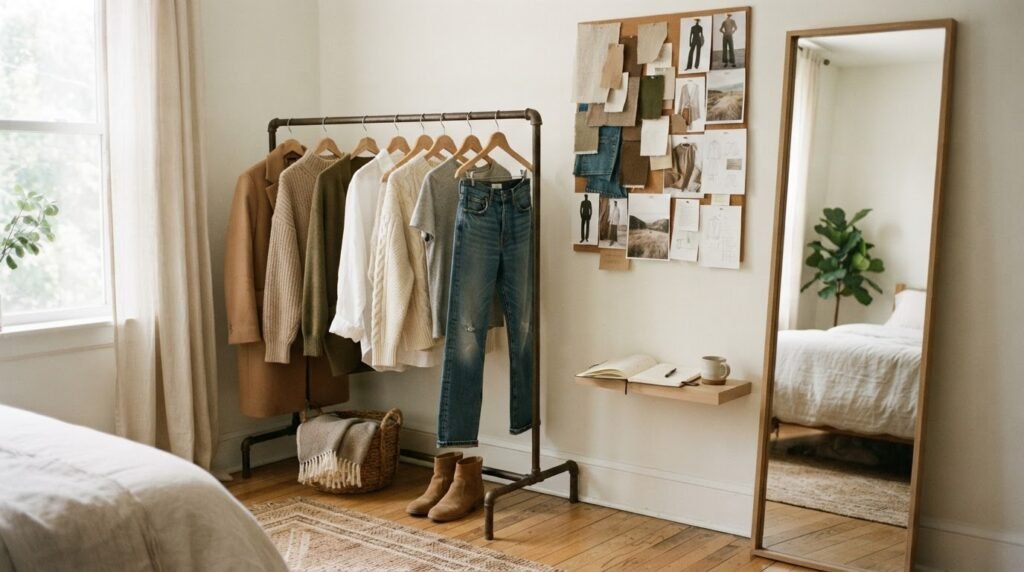
Your closet already holds clues. For the next two weeks, note or photograph what you wear each day. Or turn all your hangers backward and flip each one round when you wear it. After a month, the pieces still facing backward are the ones that don’t suit you or your life.
Then ask what your favorites have in common. Is it the color, the fit, the fabric, or how easy they are to wear?
2. Collect 20 to 30 outfits you love
Save outfit photos from Pinterest, Instagram, magazines or people you see on the street. Don’t judge them yet; just collect anything that makes you think “I’d wear that.” Aim for real people, not only models, and include photos of yourself on days you felt good.
3. Look for patterns
Lay the photos out side by side and note what repeats:
- Colors: neutrals, earth tones, brights, black?
- Silhouettes: fitted or relaxed, cropped or long, structured or soft?
- Fabrics and textures: denim, knits, linen, leather?
- Details: stripes, gold jewelry, white sneakers, tailored jackets?
Patterns that appear in a third or more of your photos are the core of your style.
4. Choose three style words
Sum up those patterns in three words, such as “relaxed, classic, earthy” or “polished, minimal, bold.” The first word is usually your main style, the second shapes it, and the third adds personality. Use your three words as a filter: if a piece doesn’t fit at least two of them, leave it on the rack.
5. Dress for the life you actually have
Estimate how you spend a typical week: work, errands, workouts, time at home, nights out. If you work from home four days a week, most of your wardrobe should be comfortable everyday clothes, not office wear or party outfits. Style that doesn’t fit your routine never gets worn.
6. Learn your fits
Fit matters more than brand or price. Notice which rises, lengths and shapes you keep reaching for, and write down the exact sizes and measurements of your best-fitting jeans, trousers and tops. That list makes shopping faster, and it’s essential when you buy secondhand or online, where sizes vary.
7. Pick a simple color palette
Choose two or three base colors that appear most in your photos, such as navy, gray, cream or black, and one to three accent colors you love. A shared palette means most of your clothes work together, so you need fewer pieces for more outfits.
8. Build two or three outfit formulas
An outfit formula is a template you can repeat, like “straight jeans + knit sweater + loafers” or “wide-leg trousers + fitted tee + blazer.” Formulas turn your style words into something you can wear on a busy Monday. Many stylish people rely on a few formulas and simply swap colors and accessories.
9. Test before you buy, then refine
Try new ideas cheaply first. Restyle what you own, borrow from a friend, or pick up a test piece secondhand. Take a quick photo of outfits you love so you can repeat them. Your style will keep changing slowly, so revisit your three words every season or two.
Common style words and the pieces behind them
| Style word | Typical pieces | Budget tip |
|---|---|---|
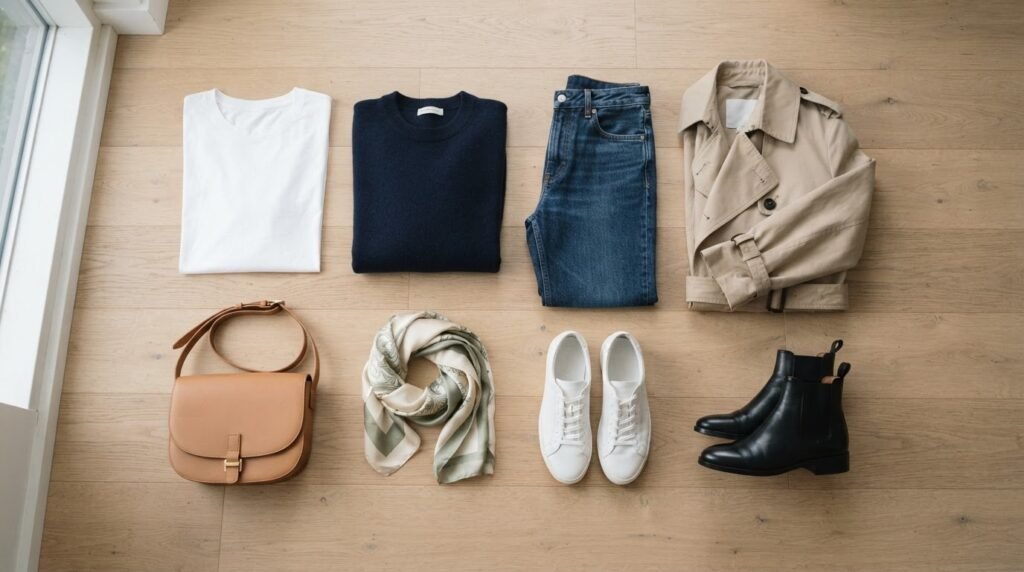
| Classic | Trench coat, white shirt, straight jeans, loafers | Look for wool and cotton basics secondhand |
| Minimal | Neutral knits, clean lines, simple sneakers | Fewer, better pieces; skip the trend items |
| Relaxed or casual | Soft tees, denim, cardigans, sneakers | Save on tees; spend on jeans you’ll wear weekly |
| Polished | Blazers, tailored trousers, structured bags | Thrift blazers and have the sleeves tailored |
| Boho | Flowing dresses, earthy prints, layered jewelry | Vintage and thrift stores are full of prints |
| Edgy | Black denim, leather jackets, boots | Used leather jackets cost far less than new |
| Sporty | Track jackets, joggers, clean sneakers | Buy athletic basics on end-of-season sales |
How to build your style on a budget
- Shop your closet first. New combinations of old pieces cost nothing.
- Buy secondhand. Thrift stores are perfect for testing a new look cheaply. Our guide on how to thrift clothes like a pro shows how to spot quality in about a minute.
- Turn your style into a capsule. A capsule wardrobe on a budget keeps your closet small, so every piece fits your three words.
- Make a gap list. Write down the few pieces you need to complete your formulas, and buy only those.
- Save for key pieces. Put a little aside each month for a coat or boots with a sinking fund instead of buying on credit.
- Pause before buying. A month without clothes shopping shows you what you really miss. Our no-spend challenge guide shows how.
Does what you wear change how you feel?
Possibly, but the science is less certain than many articles suggest. A well-known 2012 study by Hajo Adam and Adam Galinsky introduced the idea of “enclothed cognition”, reporting that people wearing a lab coat described as a doctor’s coat did better on an attention test. A larger, preregistered 2019 replication didn’t find that effect.
A 2023 review of 40 studies, written with the original authors, raised concerns about the early research. It found stronger evidence in studies published after 2015 that what we wear can influence how we think, feel and act. The honest takeaway: clothes that feel like you may help you feel more confident, but they’re not a magic fix.
Common mistakes when finding your style
- Copying one influencer head to toe. Borrow ideas, but filter them through your own life and three words.
- Buying a whole new wardrobe at once. Style develops over months. Buy slowly.
- Ignoring comfort. If it pinches, itches or needs constant adjusting, you won’t wear it.
- Chasing every trend. Add trends through cheap accents, not big purchases.
- Dressing for a life you don’t have. Build for your real week first.
Frequently asked questions
How do I find my personal style if I have no idea where to start? Start with what you already wear most, then collect 20 to 30 outfit photos you like and look for what they have in common. Patterns in color and fit usually show up quickly.
How long does it take to find your style? Most people get a clear direction within a few weeks of saving photos and tracking what they wear. Building a wardrobe that fully matches takes longer, often several months of slow, careful buying.
What are style words? Three words that sum up how you want to look and feel, such as “classic, relaxed, warm.” They act as a filter when you shop, so you only buy pieces that fit your style.
Can I find my style on a tight budget? Yes. Restyle what you own, shop secondhand, and buy only from a short gap list. Knowing your style usually means spending less, because you stop buying pieces you won’t wear.
Is it OK if my style changes? Yes. Style changes with your age, work, body and life. Revisit your three words every season or two and adjust slowly.
The bottom line
Finding your personal style is a process of noticing, not shopping. Track what you wear, collect outfits you love, find the patterns, sum them up in three words and build a few repeatable formulas around your real life. Then buy slowly and secondhand first. You’ll spend less, waste less and feel more like yourself every day.
Next steps: Turn your style into a small, mix-and-match closet with our capsule wardrobe guide, find pieces for less with our thrifting tips, and complete the look with an affordable skincare routine.
Sources
- US Bureau of Labor Statistics: Consumer Expenditures, 2025
- Ellen MacArthur Foundation: A New Textiles Economy: Redesigning Fashion’s Future (2017)
- US Environmental Protection Agency: Textiles: Material-Specific Data
- Adam, H. and Galinsky, A. D. (2012). “Enclothed cognition.” Journal of Experimental Social Psychology, 48, 918–925.
- Burns, D. M. et al. (2019): A Preregistered Direct Replication Attempt of Enclothed Cognition Effects on Stroop Performance. Journal of Experimental Social Psychology, 83.
- Horton, C. B., Adam, H. and Galinsky, A. D. (2023): Evaluating the Evidence for Enclothed Cognition: Z-Curve and Meta-Analyses. Personality and Social Psychology Bulletin.