
Quick answer: The secret to an apartment that looks expensive on a budget is to change the big, visible surfaces: warm layered lighting, larger art and mirrors, curtains hung high and wide, and a rug that’s the right size. Use renter-friendly fixes like peel-and-stick wallpaper and plug-in sconces, buy furniture secondhand, and spend only on the pieces you touch every day.
You don’t need a big budget or a landlord’s permission to make a rental feel like yours. All 25 ideas below are renter-friendly, and most cost under $50.
2026 decor trends you can copy for less
Pinterest’s annual trend forecast, Pinterest Predicts 2026, points to a few looks that are easy to fake on a budget:
- Afrohemian: Natural-fiber rugs, woven baskets, textiles and wall art inspired by African design. Searches for “afrobohemian home decor” rose 220%. Thrift stores are full of baskets and woven pieces.
- Neodeco: A sleek, modern take on art deco, with pendant lamps, brass accents and curved shapes. A brass-finish lamp or mirror gets you the look.
- Cool blue: One of the forecast’s signature colors. Try it in pillows, a throw or one painted piece of furniture.
Trends come and go, so add them through small, cheap accents rather than big furniture.
Walls
1. Make one accent wall with peel-and-stick wallpaper
Removable wallpaper is one of HGTV’s top renter-friendly upgrades. Do just one wall, such as behind the bed or the sofa, so you use only a roll or two. Test a small piece in a corner first to make sure it peels off cleanly.
2. Go big with art
Small art makes a room look cluttered; one large piece looks intentional. Frame a large poster, a fabric remnant or a free printable. Many museums, including The Met, offer public-domain artwork you can download and print for free.
3. Paint thrifted frames the same color
Mismatched thrift-store frames look like a designer gallery wall when you spray-paint them all black, white or brass. Lay the arrangement out on the floor before you hang anything.
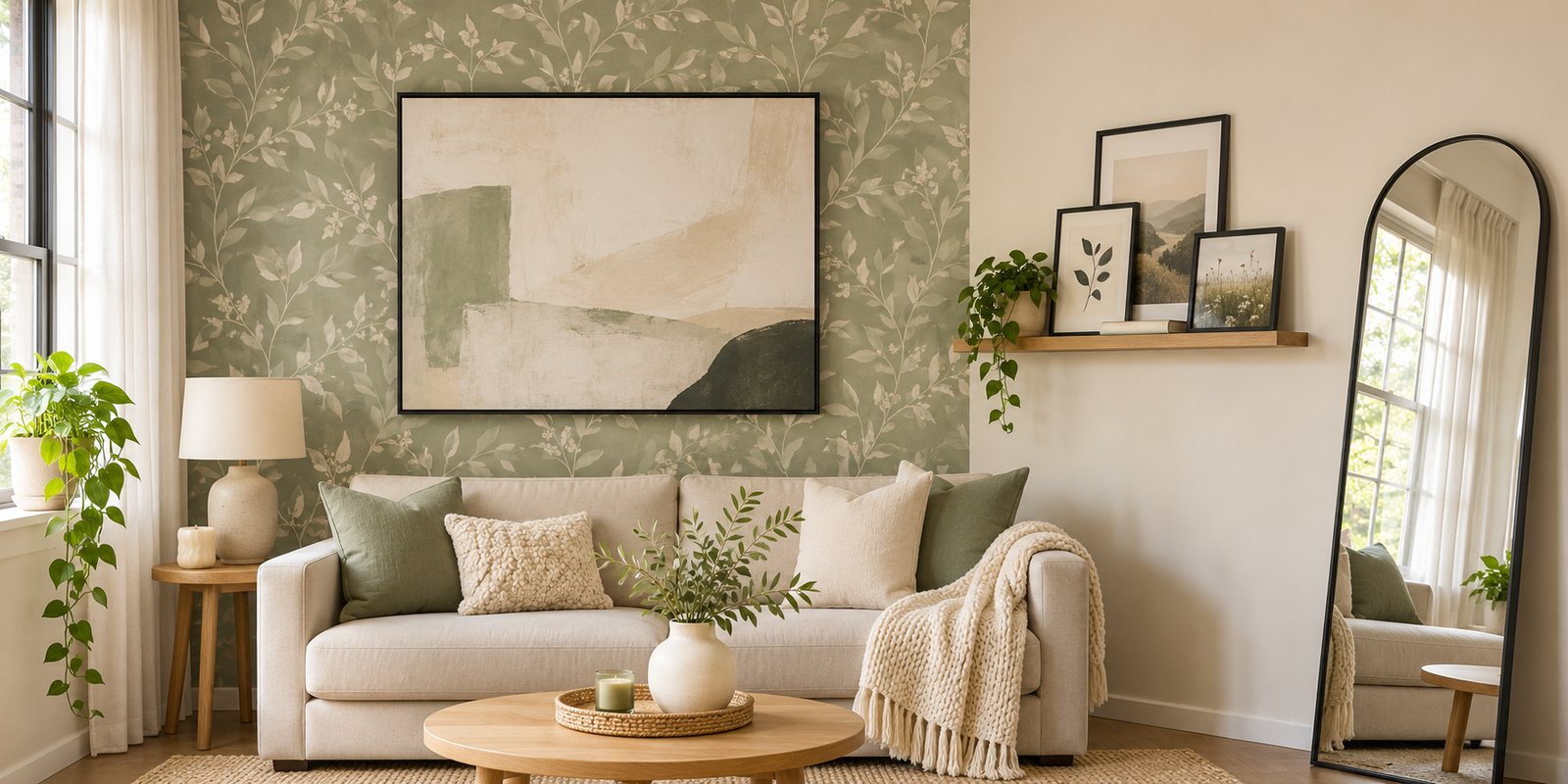
4. Lean an oversized mirror
A big floor mirror bounces light around and makes a small room feel bigger. Leaning it against the wall means no drilling. Secure it with a furniture anchor if you have pets or kids.
5. Hang things without holes
Adhesive hooks and strips hold frames, small shelves and hooks without damaging walls. Check the weight limit on the package, and follow the removal instructions when you move out.
6. Add a picture ledge
A narrow ledge shelf lets you lean and swap art and books without making new holes every time. It looks styled even with just three or four items.
7. Ask about paint
Some landlords allow painting if you return the walls to the original color, or if you choose from approved shades. A soft, warm neutral or a muted blue changes a room more than anything else. Always get the OK in writing.
Lighting
8. Switch to warm-white bulbs
Harsh, bluish light makes any room look cheap. Swap to warm-white LED bulbs (around 2700K on the box). It’s one of the cheapest upgrades you can make, and it changes the whole mood of a room.
9. Add plug-in wall sconces
Plug-in sconces give you the look of built-in lighting without an electrician. Hide the cord with a paintable cord cover that matches your wall.
10. Use three light sources per room
Expensive-looking rooms rarely rely on one ceiling light. Mix a floor lamp, a table lamp and an accent light (like a small lamp on a shelf) at different heights. Turn the overhead light off at night.
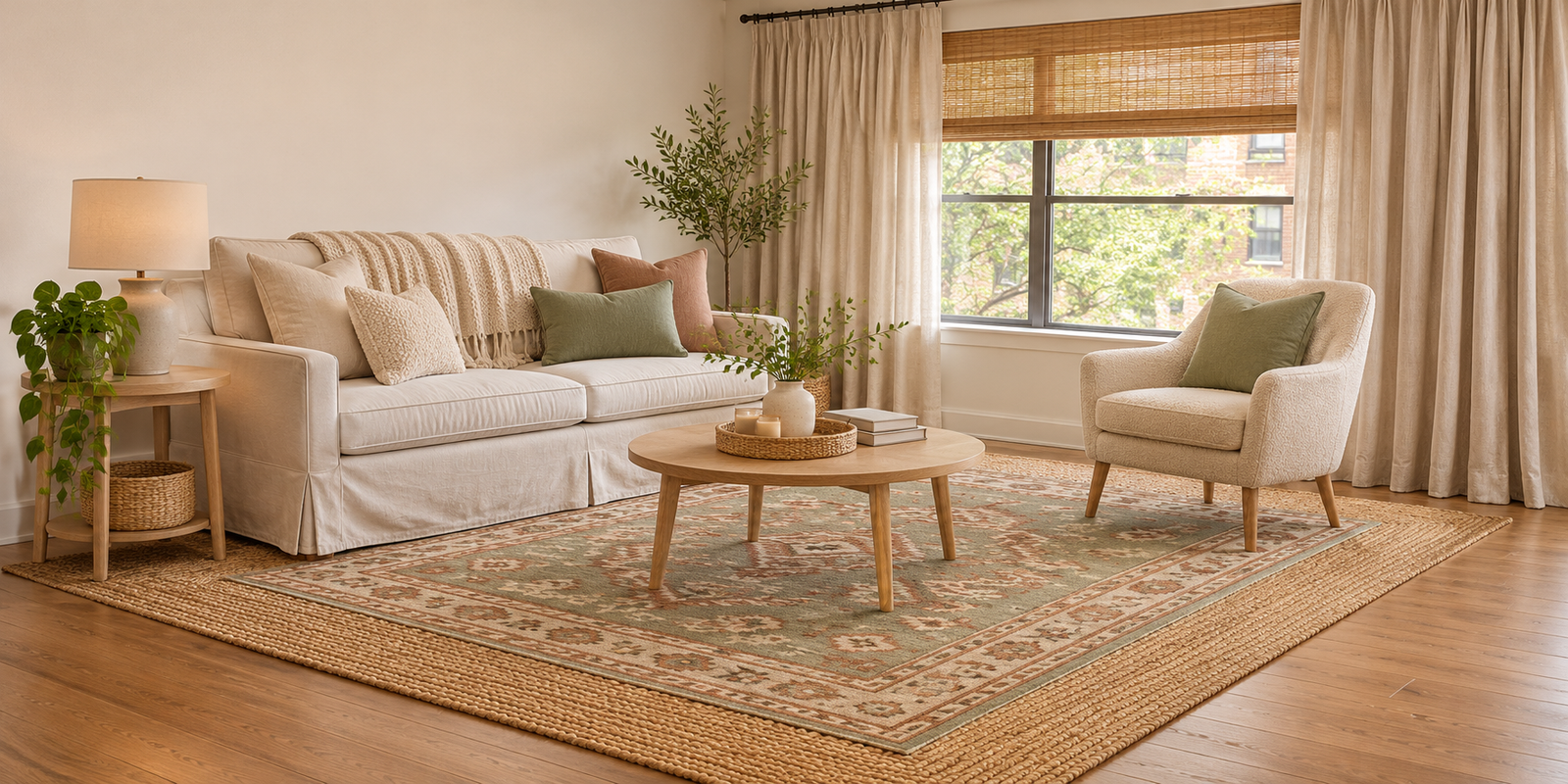
11. Upgrade the lampshades
Thrifted lamps often have great bases and dated shades. A new linen or pleated shade makes an old lamp look new for much less than buying another lamp.
Floors
12. Buy a rug that’s big enough
A too-small rug is the most common budget decorating mistake. In a living room, the front legs of your sofa and chairs should sit on the rug. An 8 × 10 rug in an affordable natural fiber looks far better than a fancy small one.
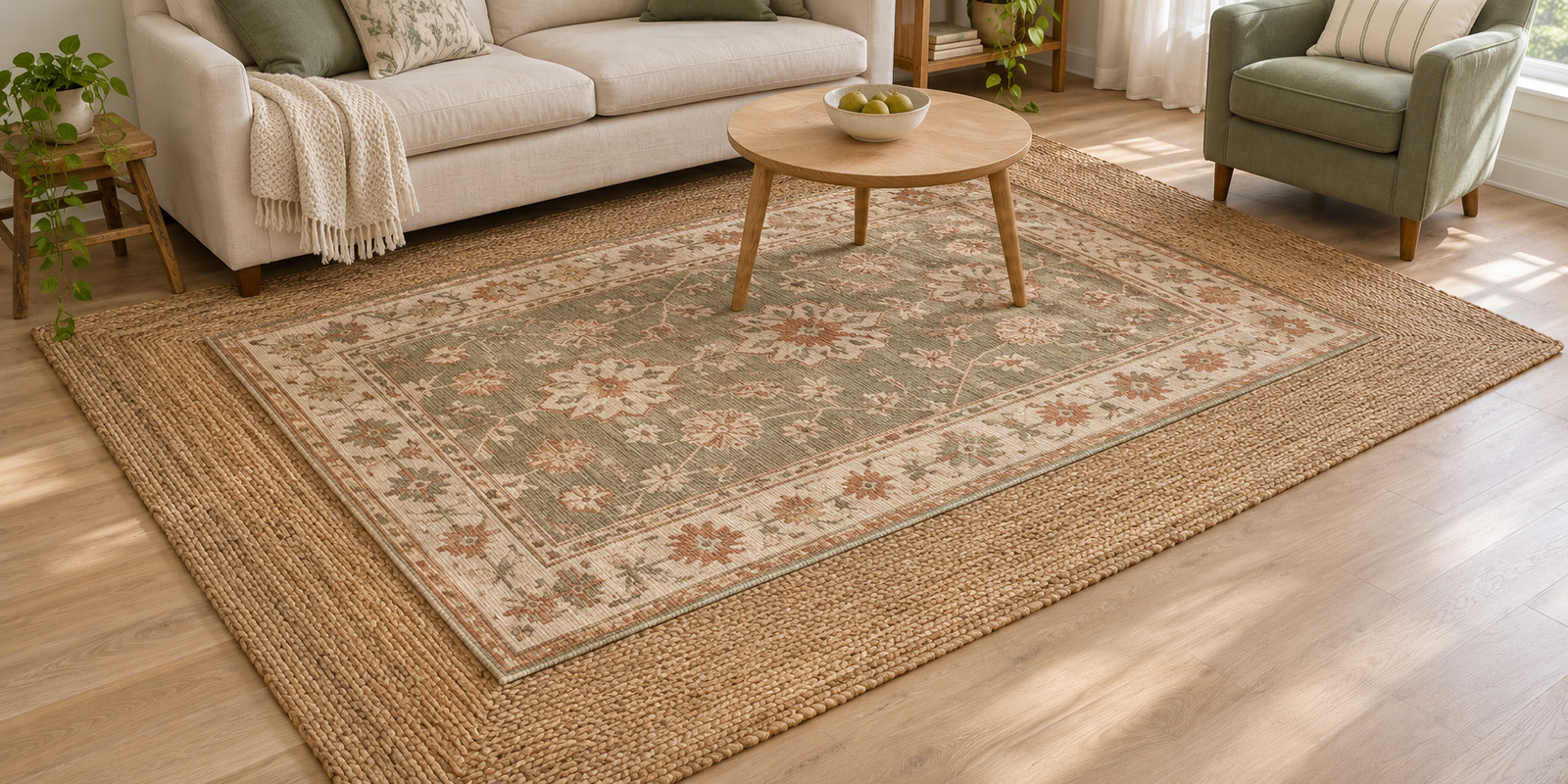
13. Layer rugs or try peel-and-stick tiles
Put a smaller patterned rug on top of a large, cheap jute rug for texture. In the kitchen or bathroom, peel-and-stick floor tiles can cover dated flooring and come up when you leave. Check your lease first.
Windows and textiles
14. Hang curtains high and wide
Mount the curtain rod close to the ceiling and extend it several inches past each side of the window. The window instantly looks taller and bigger. Choose curtains long enough to just touch the floor.
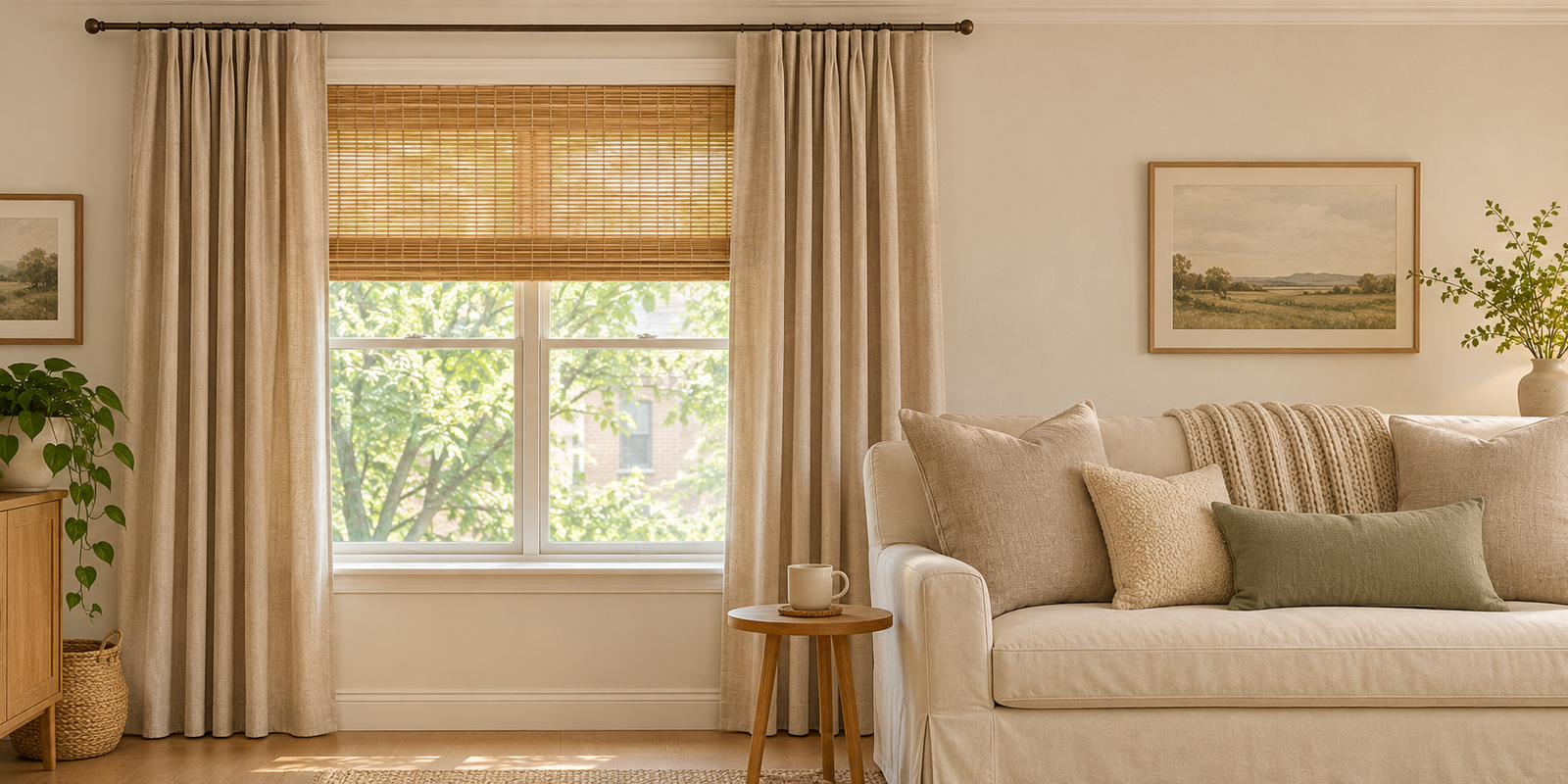
15. Replace plain blinds
If the lease allows it, swap basic blinds for simple woven shades or a fabric shade, and store the originals to put back when you leave.
16. Use pillow covers, not new pillows
Buy good inserts once, then change the covers by season for a few dollars each. Mix two sizes and two textures, such as linen and bouclé, for a styled look.
17. Slipcover or throw over a tired sofa
A fitted slipcover or a large throw draped neatly over the back can hide a worn or mismatched secondhand couch.
Furniture and storage
18. Buy solid wood secondhand
Solid wood dressers, side tables and chairs from Facebook Marketplace or thrift stores often cost less than new flat-pack furniture and last longer. Clean them, then paint or add new knobs.
19. Swap the hardware
New cabinet pulls and drawer knobs are a big upgrade for a small price, and HGTV recommends it for renters. Keep the originals in a labeled bag to reinstall before you move out.
20. Use baskets for storage
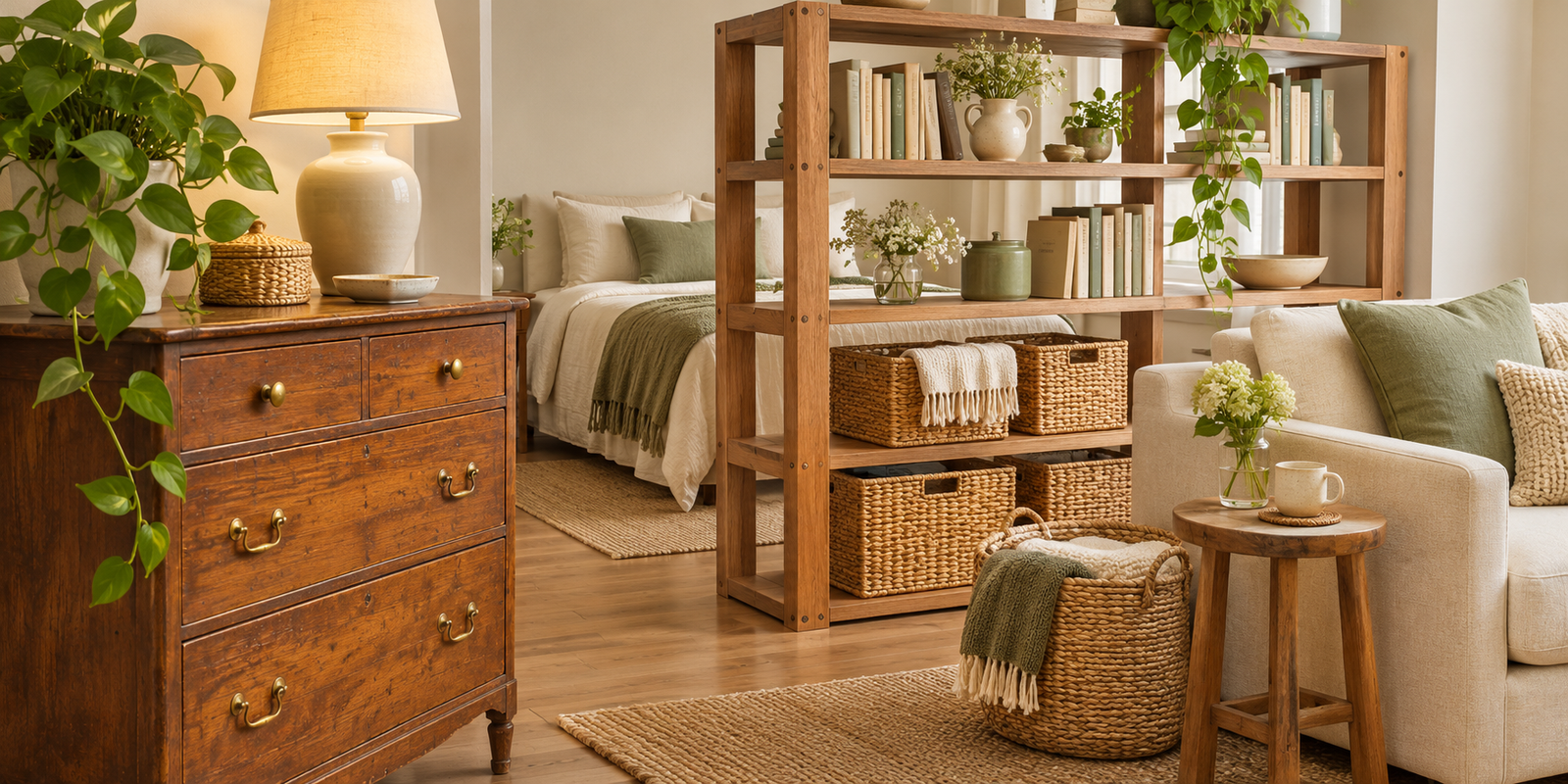
Woven baskets hide clutter and fit the natural-texture look that’s trending. Use them for blankets, shoes, toys and remotes.
21. Go vertical
Tall bookshelves and over-the-door organizers use wall space instead of floor space. That’s how small apartments stay tidy, and tidy rooms always look more expensive.
22. Create zones in a studio
Use an open bookshelf, a curtain on a ceiling track or a rug to separate the bedroom from the living area. A studio with zones feels like a real home.
Finishing touches
23. Bring in plants
One large plant makes more impact than many tiny ones. Easy picks for beginners include pothos, snake plants and ZZ plants. Good-quality faux plants work too in rooms with little light.
24. Cover dated surfaces with contact paper
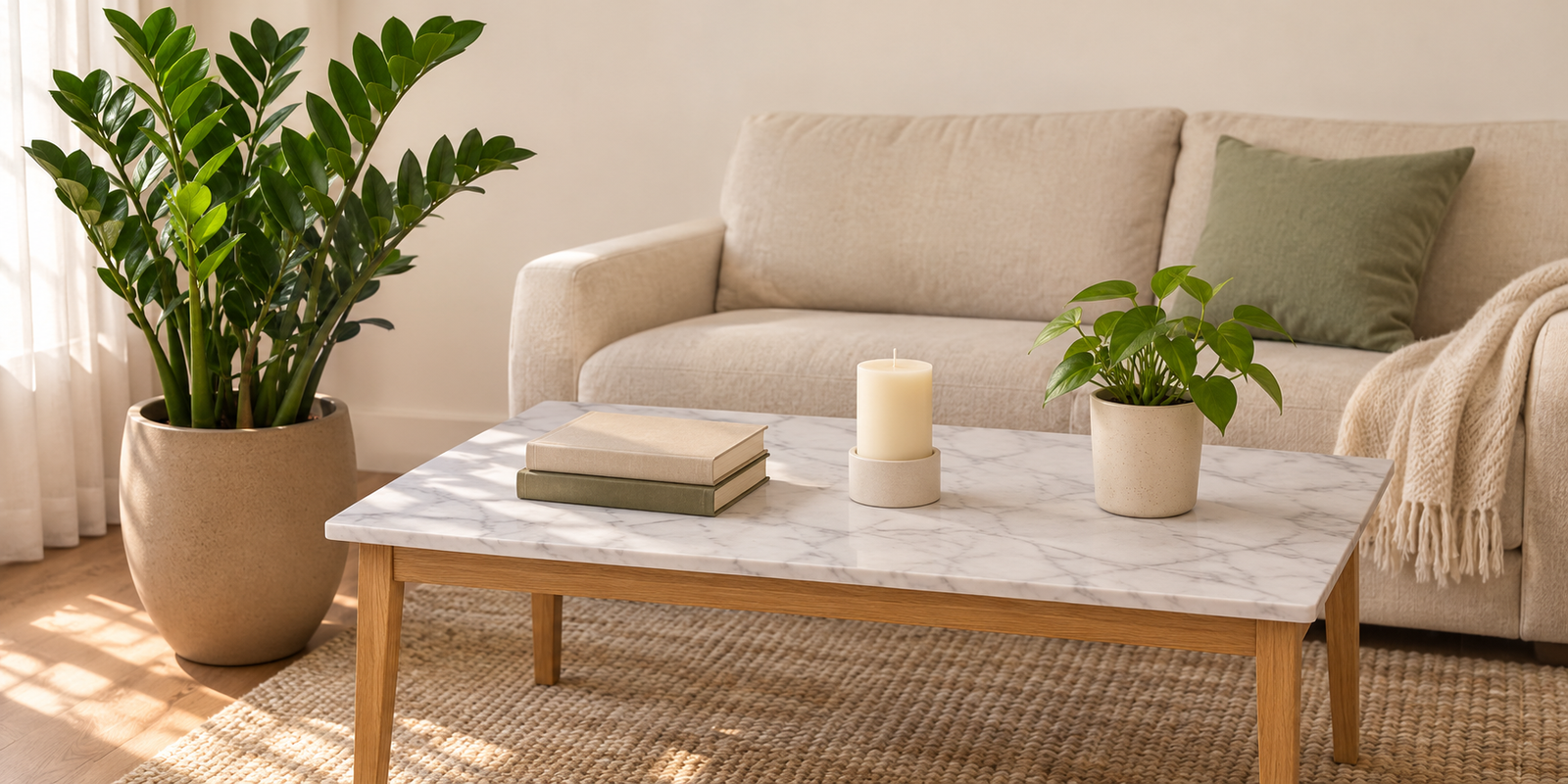
Removable contact paper can refresh a laminate counter, an old shelf or an appliance front. Choose a simple marble or wood pattern for the most expensive look.
25. Style in groups of three
On coffee tables and shelves, group items in threes with varied heights: a stack of books, a candle and a small plant. Leave some empty space; clutter looks cheap.
Bonus for the bathroom: Swap the showerhead for a better one and add a matching soap dispenser and towels. Keep the original showerhead to reinstall later.
Where to spend and where to save
| Spend more on | Save on |
|---|---|
| Mattress and bedding: you use them every night | Side tables, shelves and dressers: buy secondhand |
| Sofa, or at least a comfortable seat | Decor accents: thrift, swap seasonally |
| Good lighting and warm bulbs | Art: free prints and thrifted frames |
| A rug in the right size | Pillows: buy covers, not new pillows |
| Window coverings for privacy | Trendy pieces you may tire of in a year |
The rule of thumb: spend on what you touch or use every day, and save on what you only look at.
Frequently asked questions
How can I make my apartment look expensive on a budget? Focus on lighting, scale and tidiness. Use warm bulbs and several lamps, choose fewer but larger art pieces and rugs, hang curtains high and keep surfaces uncluttered.
What decor is renter-friendly? Peel-and-stick wallpaper and tiles, adhesive hooks, plug-in sconces, leaning mirrors and art, removable contact paper, and swapped hardware (keep the originals). Always check your lease, and test removable products in a hidden spot first.
How much should I spend decorating my first apartment? There’s no set number. Start with the essentials in our first apartment checklist, then set a small monthly decor budget inside your overall budget and add one piece at a time.
Where can I find cheap apartment decor? Thrift stores, Facebook Marketplace, Buy Nothing groups, discount stores like HomeGoods, Target, IKEA and Walmart, and end-of-season sales.
Can I paint my rental apartment? Only with your landlord’s permission, ideally in writing. Many will allow it if you repaint the original color before moving out.
The bottom line
A beautiful apartment comes from smart choices, not a big budget. Start with lighting, a properly sized rug and curtains hung high. Then add art, plants and secondhand finds over time. Each idea here works in a rental and most cost very little.
Next steps: Moving soon? Use our first apartment checklist. Planning to buy someday? Try the free Home Affordability Calculator.
Sources
- Axios: Glamour, thrill and alien-core: Pinterest predicts 2026 trends (December 9, 2025)
- HGTV: Renter-friendly decorating ideas (updated June 23, 2026)