
Quick answer: To eat healthy on a budget, plan your meals for the week, shop from a list, and build meals around cheap, nutritious staples like beans, lentils, oats, eggs, rice, frozen vegetables and in-season fruit. Cook at home in batches, use leftovers on purpose, and save takeout for planned treats. These habits cut grocery costs without cutting nutrition.
Food prices have climbed in recent years, so it’s easy to believe that eating well is only for people with big budgets. It isn’t. Some of the healthiest foods in the store are also the cheapest.
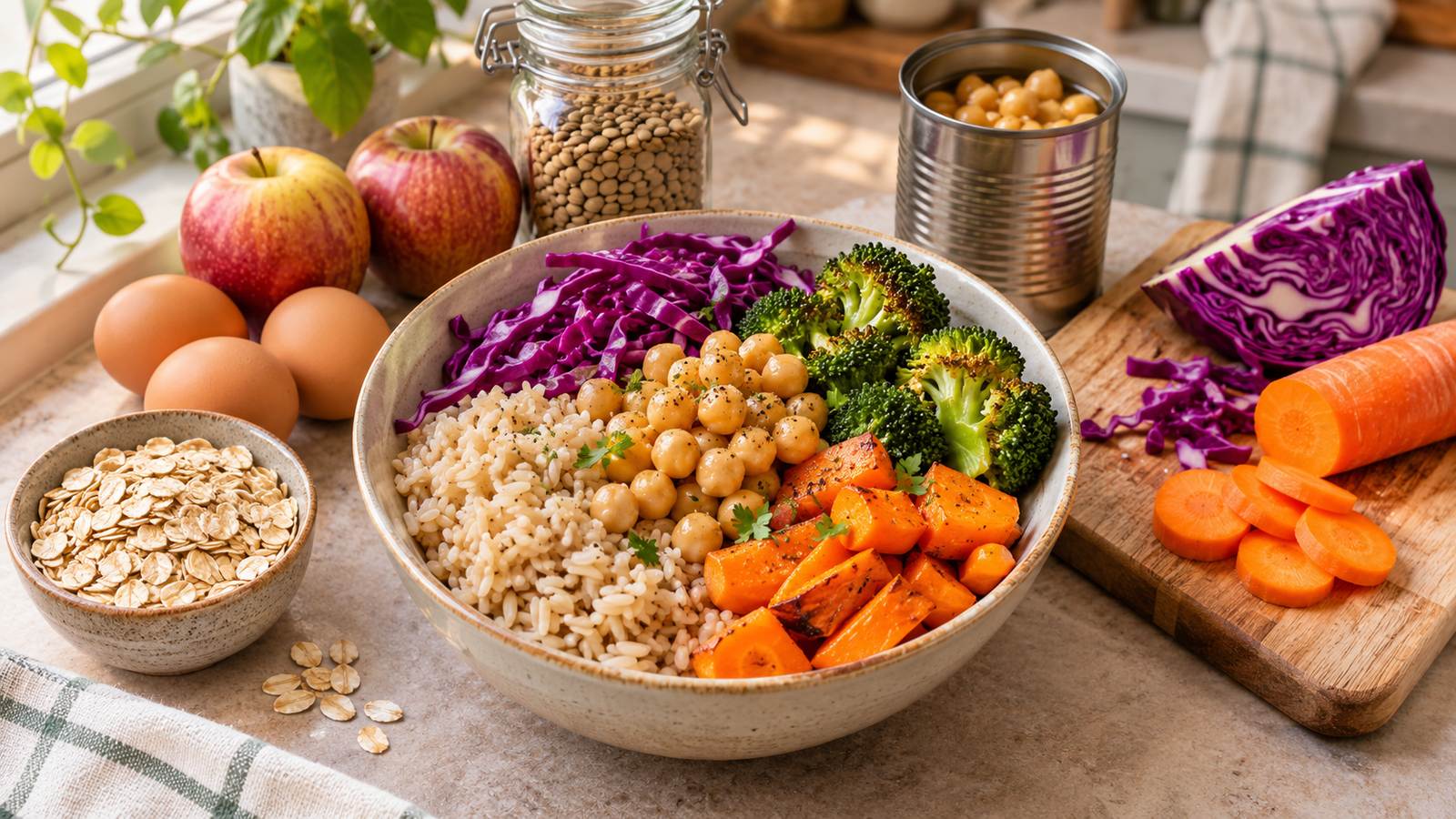
What does a healthy grocery budget look like?
The USDA publishes monthly food plans that show what a nutritious, home-cooked diet costs at four levels: Thrifty, Low-Cost, Moderate-Cost and Liberal. The Thrifty plan is the USDA’s model of a healthy diet at the lowest realistic cost.
| Household | Thrifty plan (lowest cost) | Moderate-cost plan |
|---|---|---|
| Family of four (2 adults, kids 6–8 and 9–11) | About $1,024 a month (September 2026) | About $1,500 a month |
| Single adult | About $249–$313 a month, by age and sex | About $328–$388 a month |
These numbers assume you cook most meals at home. If you’re spending well above the Thrifty level today, the tips below can help close the gap.
15 tips to eat healthy on a budget
These tips follow the same three stages as the USDA’s MyPlate healthy eating on a budget guide: plan, shop and prepare.
Plan
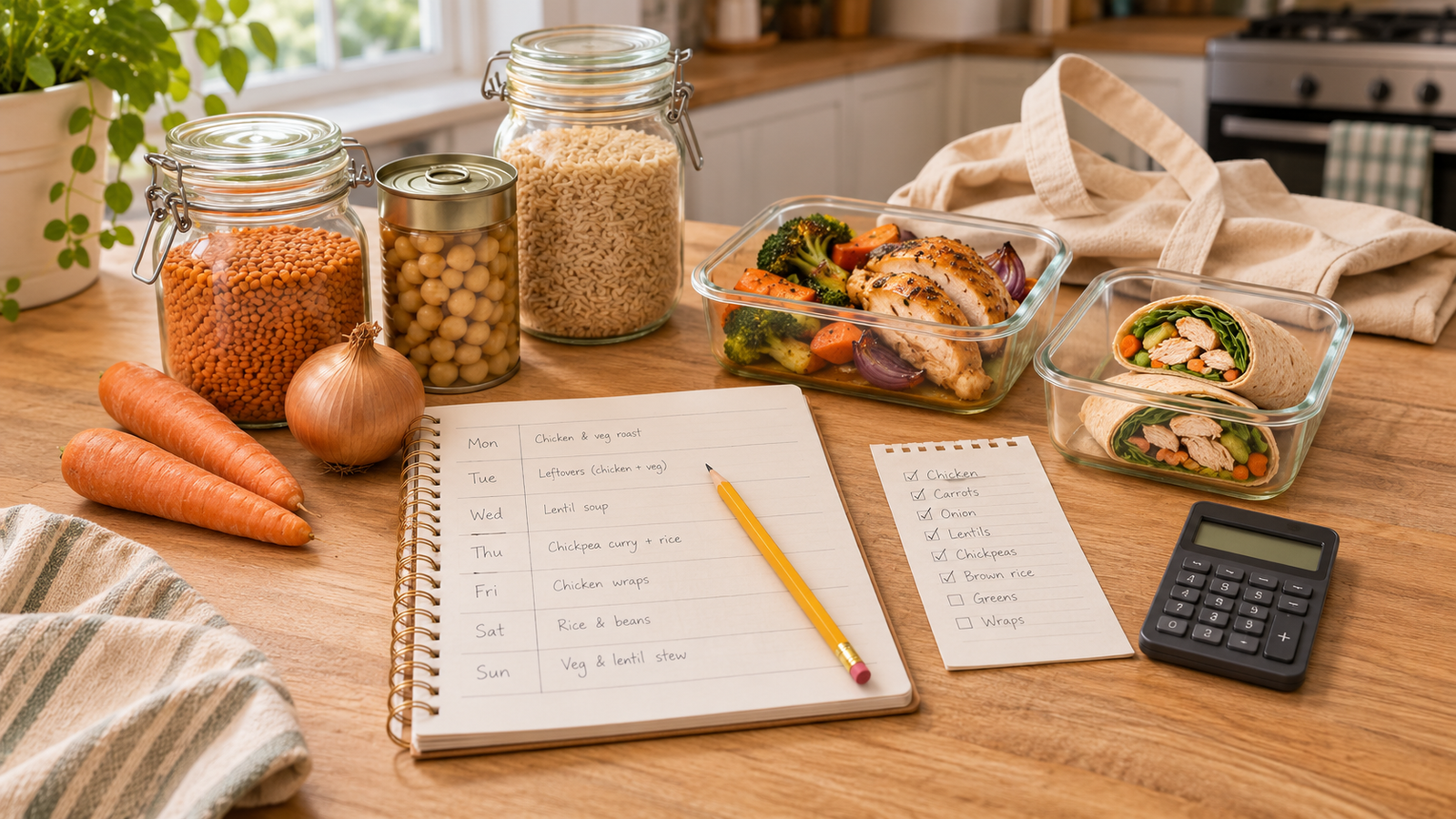
1. Plan your meals for the week. Choose 4–5 dinners and a couple of easy breakfasts and lunches. Planning ahead is the single biggest money-saver, because it stops last-minute takeout and wasted food.
2. Shop your kitchen first. Before you write the list, check the fridge, freezer and pantry. Build at least one meal around what’s already there.
3. Make a list and stick to it. Group it by store section so you’re in and out faster, with less time to grab extras.
4. Plan to use leftovers. Cook once, eat twice. Tonight’s roasted chicken becomes tomorrow’s wraps or soup.
5. Set a weekly grocery budget. Use the USDA numbers above as a guide, and give groceries their own line in your monthly budget.
Shop
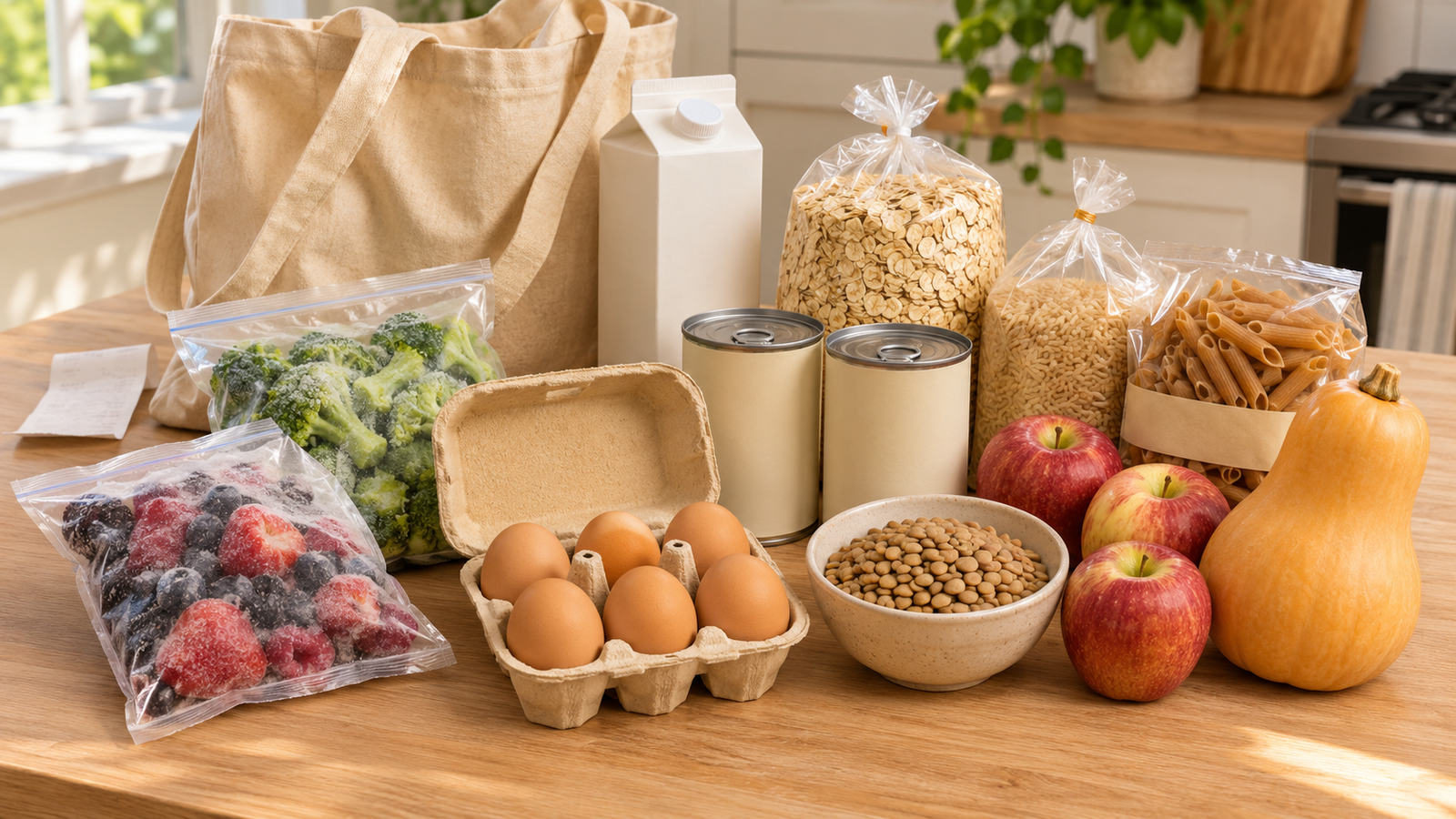
6. Buy beans, lentils and eggs for protein. They cost far less per serving than most meats and are packed with protein and fiber. Swap meat for beans in a few meals a week.
7. Buy frozen fruit and vegetables. They’re frozen at their peak, last for months and cut waste. They’re just as useful as fresh in smoothies, stir-fries and soups.
8. Choose in-season produce. Fruit and vegetables in season are usually cheaper and taste better. Think apples and squash in fall, citrus in winter, berries in summer.
9. Buy whole grains in bulk. Oats, brown rice and whole wheat pasta are cheap, filling and keep for months.
10. Choose store brands. Store-brand staples like canned beans, oats, frozen vegetables and milk are usually much cheaper than name brands, and often nearly identical.
11. Compare unit prices. The shelf tag shows the price per ounce or pound. The bigger package isn’t always the better deal.
Cook
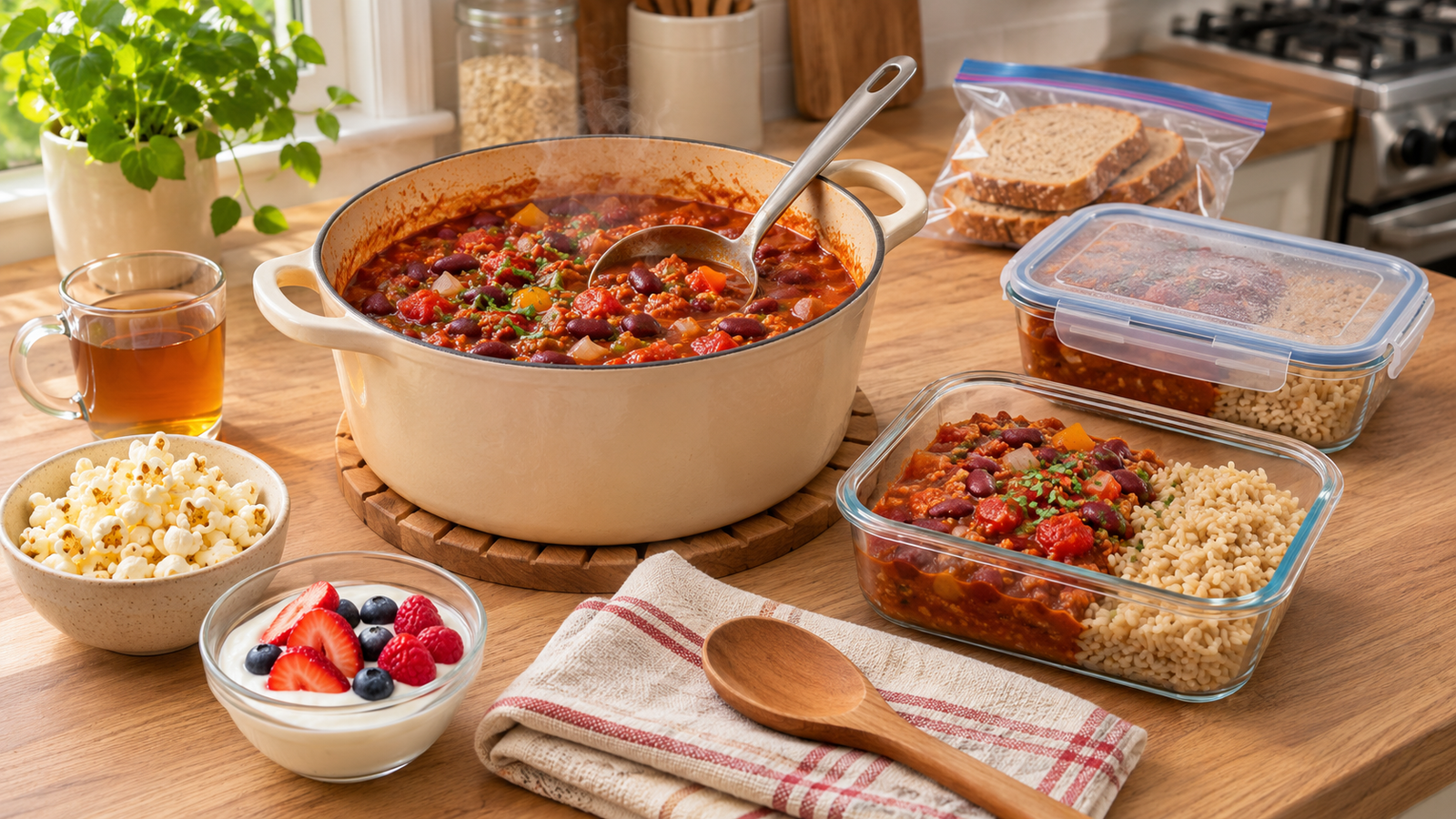
12. Batch cook once a week. Make a big pot of soup, chili or grains on the weekend and portion it out. It saves money and time on busy nights.
13. Learn 5 cheap, healthy base meals. For example: bean chili, veggie stir-fry with rice, lentil soup, sheet-pan chicken and vegetables, and egg fried rice. Rotate them with different spices.
14. Use your freezer. Freeze bread, extra portions and produce that’s about to go bad. Less waste means more money stays in your pocket.
15. Make your own snacks and drinks. Popcorn, yogurt with fruit, and water or tea instead of soda cost a fraction of packaged snacks and drinks.
22 cheap healthy foods to keep on hand
Build your weekly list from these staples. They’re affordable at most US grocery stores, keep well and work in dozens of meals.
| Food group | Budget staples | Easy ways to use them |
|---|---|---|
| Protein | Dry or canned beans, lentils, eggs, canned tuna, peanut butter, chicken thighs | Chili, soups, egg scrambles, tuna salad, sheet-pan dinners |
| Grains | Oats, brown rice, whole wheat pasta, whole wheat bread or tortillas | Overnight oats, rice bowls, pasta bakes, wraps |
| Vegetables | Frozen mixed vegetables, carrots, cabbage, onions, canned tomatoes, sweet potatoes | Stir-fries, roasted trays, slaws, sauces, soups |
| Fruit | Bananas, apples, oranges in winter, frozen berries | Snacks, smoothies, oatmeal toppings |
| Dairy | Plain yogurt (large tub), milk | Breakfasts, snacks, sauces |
Cabbage deserves a special mention. It’s one of the cheapest vegetables in the store, lasts for weeks in the fridge, and works raw in slaws, cooked in stir-fries or simmered in soups.
A sample day of budget-friendly healthy eating
Here’s what one simple day built from the staples above can look like:
| Meal | What to make |
|---|---|
| Breakfast | Oatmeal with a sliced banana and a spoon of peanut butter |
| Lunch | Leftover bean chili with a side of carrot sticks |
| Snack | Plain yogurt with frozen berries |
| Dinner | Egg fried rice with frozen mixed vegetables and shredded cabbage |
Everything on this menu uses ingredients from the staples list, and most of it can be made in batches for several days.
Frequently asked questions
Is it really possible to eat healthy on a budget? Yes. The USDA’s Thrifty Food Plan is built to show that a nutritious diet can be affordable. The key is cooking at home with low-cost staples like beans, oats, eggs, rice and frozen vegetables.
What are the cheapest healthy foods? Dry beans and lentils, oats, rice, eggs, bananas, cabbage, carrots, frozen vegetables, canned tomatoes and peanut butter are among the best value foods in most US stores.
How much should one person spend on groceries a month? The USDA’s Thrifty plan puts a single adult at roughly $249 to $313 a month, and its Moderate-Cost plan at about $328 to $388, depending on age and sex. Where you live and what you buy will change that.
Are frozen vegetables as healthy as fresh? Frozen vegetables are a nutritious, affordable choice. They’re frozen soon after harvest, last for months and cut food waste. Check the label and choose plain ones without added sauces or salt.
How can I eat healthy with no time to cook? Batch cook once a week, keep frozen vegetables and canned beans on hand, and learn a few 15-minute meals like egg fried rice or bean quesadillas.
The bottom line
Eating healthy on a budget comes down to three habits: plan your week, shop from a list of cheap staples and cook at home in batches. Start with one change this week, like a meal plan or a weekly bean-based dinner, and watch your grocery bill shrink.
Next steps: Put groceries into your monthly budget. A printable healthy grocery list is coming next.
Sources
- USDA Food and Nutrition Service: USDA Food Plans: Monthly cost of food reports
- USDA MyPlate: Healthy eating on a budget
- American Default: Basic food budgets (USDA Thrifty plan, September 2026)
- Nasdaq / GOBankingRates: How much the average American should aim to spend on groceries in 2026
- Chowhound: How much the average American should aim to spend on groceries each month in 2026
This article is for general information. If you have a medical condition or special diet, talk with a doctor or registered dietitian.