
Building plan approval process in municipal corporations — documents, fees, online portals, FAR/setback rules & common rejection reasons. Step-by-step guide.
Building Plan Approval Basics: Documents and Steps in Municipal Corporations
Manoj bought a plot in Jaipur. He hired a local mason, drew up a floor plan on paper, and started construction. Three months in, the municipal corporation served him a notice — construction without sanctioned plan, violation of setback norms, and a stop-work order. Demolishing the already-built portion cost him ₹4 lakh. Getting the plan approved properly would have cost a fraction of that.
This is not rare. Across India, thousands of residential constructions proceed without proper building plan approval, and the owners pay for it later — in penalties, demolition orders, or the inability to get a completion certificate, water connection, or electricity meter. Understanding the building plan approval process before you lay the first brick saves money, time, and legal headaches. This guide covers the documents you need, the steps involved, and the things that trip people up most often (ghar ka naksha kaise pass karaye — yahi sabse pehla sawaal hona chahiye, construction se pehle).
What Building Plan Approval Actually Means
Building plan approval (also called building plan sanction or building permit) is formal permission from your local municipal authority — nagar nigam, municipal corporation, development authority, or gram panchayat — to construct on your plot. The authority checks whether your proposed construction follows local building bylaws: setbacks, Floor Area Ratio (FAR/FSI), height limits, parking requirements, road width norms, and zoning regulations.
Without this approval, your construction is technically unauthorized under Section 433A of the Indian Municipal Act and equivalent state laws. Penalties range from fines to sealing to demolition.
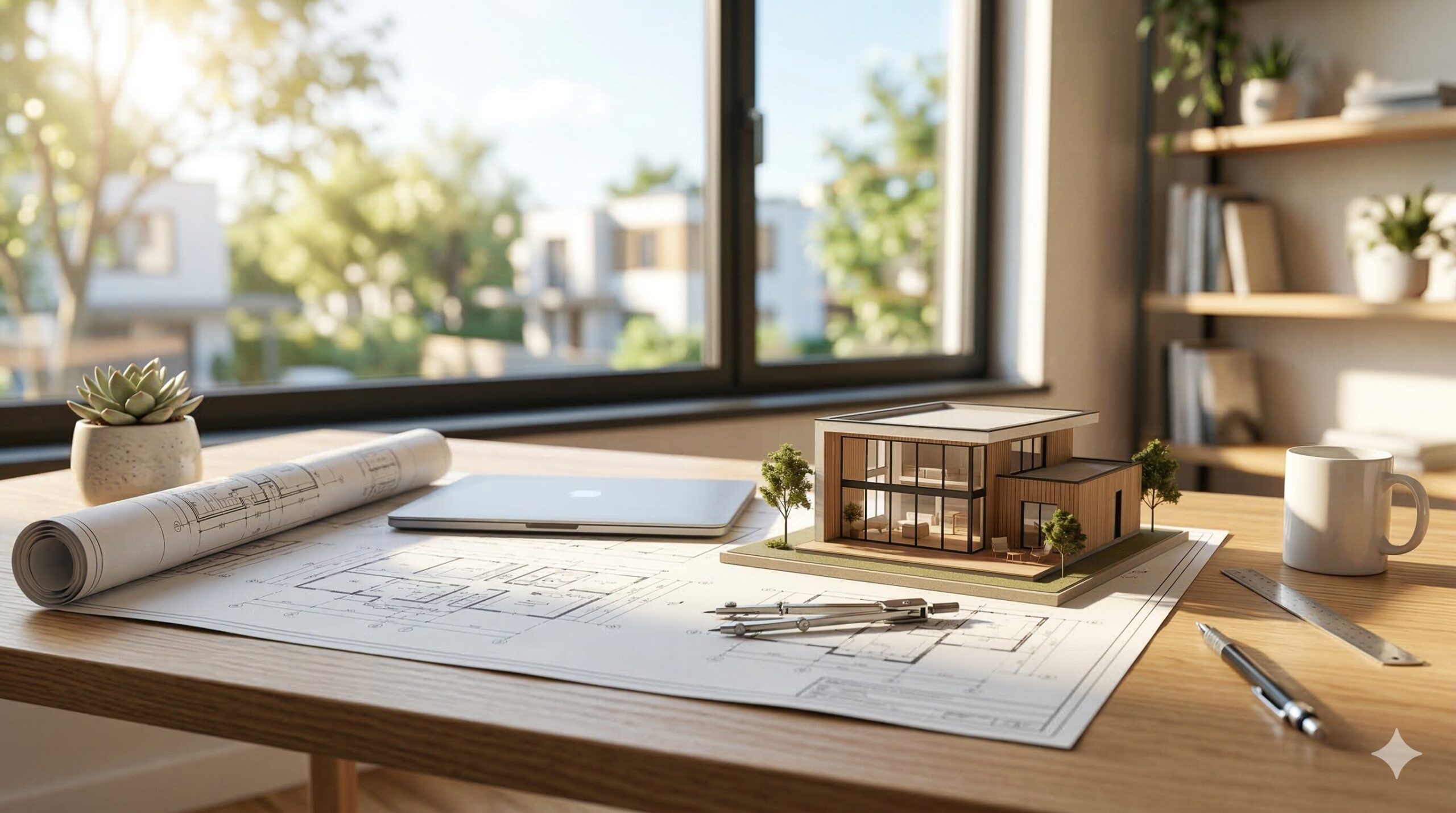
Who Needs It
Anyone building a new structure — residential, commercial, or industrial — within a municipal corporation or development authority’s jurisdiction. This includes individual houses, row houses, apartments, and even significant additions or alterations to existing buildings. In many cities, even internal structural modifications (like adding a floor) require approval.
The approving authority depends on your location:
- Delhi: MCD (Municipal Corporation of Delhi) or DDA (Delhi Development Authority) — applications via OBPAS (Online Building Plan Approval System)
- Bengaluru: BBMP (Bruhat Bengaluru Mahanagara Palike) or BDA — online portal at https://bbmp.gov.in
- Mumbai/Pune: MCGM (BMC) or PMC — via the respective municipal portals
- Hyderabad: GHMC or HMDA — via the TS-iPASS single-window system
- Gujarat cities: Via https://enagar.gujarat.gov.in (eNagar portal)
- Smaller towns/rural areas: Through the local nagar palika, nagar panchayat, or gram panchayat
If you’re unsure which body covers your plot, check the property tax receipt — the issuing authority is usually the same one that approves building plans.
Documents Required for Building Plan Approval
This is the part where incomplete paperwork causes the most delays. The exact list varies by city, but here’s the common core that applies across most municipal corporations:
Ownership & Identity Documents:
- Sale deed or title deed (registry) — proof of ownership of the plot
- Latest property tax receipt (paid up to date — unpaid dues will block your application)
- Encumbrance Certificate (EC) — showing the property is free of legal claims
- Aadhaar card and PAN card of the applicant
- Passport-sized photographs
Land & Survey Documents:
- Khata certificate and extract (in Karnataka), or khasra/khatauni (in UP/MP/Rajasthan), or property card (in Maharashtra/Gujarat) — basically, the revenue record proving your plot details
- Survey sketch from the revenue department showing plot boundaries and dimensions
- Site plan showing the plot’s position relative to surrounding roads and plots
Technical Drawings (prepared by a licensed architect):
- Architectural drawings — floor plans, elevations (all sides), sections, roof plan
- Structural drawings — foundation plan, beam/column layout, stability calculations signed by a licensed structural engineer
- Site plan — showing the proposed building’s position on the plot, with setbacks marked from all boundaries
- Area statement — showing FAR/FSI calculation, ground coverage, and total built-up area
NOCs (No Objection Certificates) — as applicable:
- Fire department NOC (mandatory for buildings above 15 meters or multi-storey)
- Airport Authority NOC (if near an airport — height restrictions apply)
- Environmental clearance (for large projects)
- Water supply and sewerage board NOC
- Land use conversion certificate (if land was previously agricultural — this is the NA order, or non-agricultural permission)
Other Documents:
- Copy of the architect’s registration certificate (under the Architects Act, 1972)
- Undertaking/affidavit by the owner and architect
- Soil test report (required in some cities for multi-storey construction)
- Rainwater harvesting certificate (mandatory in Delhi for plots above 100 sq meters, and in many other cities)
I’ve seen applications get returned five or six times because of one missing NOC or an expired property tax receipt. Before you submit anything, run through your city’s official checklist — most municipal portals publish this. Don’t rely on the architect alone to track everything. Double-check yourself.
The Building Plan Approval Process — Step by Step
The process has gone partly or fully online in most major cities. Here’s the general flow:
- Hire a licensed architect — this is non-negotiable. Under the Architects Act, 1972, building plans must be prepared and signed by a registered architect or licensed engineer. The architect designs the building within local bylaws (FAR, setbacks, height restrictions) and prepares all technical drawings.
- Get your land documents in order — latest property tax receipt, EC, survey sketch, and ownership proof. If the land is agricultural, get the NA conversion done first through the revenue department.
- Prepare the complete drawing set — floor plans, elevations, sections, site plan with setback markings, structural drawings, and area statement. Everything must comply with your city’s Development Control Regulations (DCR) or building bylaws.
- Obtain required NOCs — fire, airport, environmental, water board — as applicable. This can take 2–4 weeks separately, so start early. Some cities now have a single-window clearance system (like TS-iPASS in Telangana) where you can apply for multiple NOCs together.
- Submit the application — online through your municipal portal, or offline at the town planning department counter:
- Upload all documents and drawings (usually in PDF format; some portals accept AutoCAD DXF/DWG files for automated scrutiny)
- Pay the scrutiny fee and development charges (varies widely by city, plot size, and building type)
- Get an acknowledgment with an application/file number
- Plan scrutiny — the municipal engineers review your plan for compliance with bylaws. They check setbacks, FAR, height, parking, road access, and zoning. If everything is in order, the plan is approved. If not, you’ll receive an objection memo listing the issues — your architect revises the plan and resubmits.
- Pay development charges and other fees — once the plan is technically cleared, you’ll be asked to pay development charges, infrastructure charges, labour cess, and other applicable fees. Amounts vary significantly — from a few thousand rupees for a small residential plot to lakhs for commercial construction.
- Receive the sanctioned plan — the approved plan with the municipal authority’s stamp, signature, and sanction number. This is your legal permission to begin construction.
Priya from Ahmedabad submitted her building plan through the eNagar Gujarat portal. The automated system flagged a setback violation — her architect had left only 1.5 meters rear setback when the bylaws required 2 meters for her plot size. She revised the plan, resubmitted, and got approval within 22 days total. Without the online system’s automatic checks, she would have discovered the violation months later during a site inspection.
Fees and Timeline
Fees: These are highly city-specific and depend on plot area, building type (residential/commercial), built-up area, and number of floors. As a rough guide:
- Scrutiny/processing fee: ₹2 to ₹10 per sq ft of proposed construction (varies by city)
- Development charges: Calculated per sq ft or as a percentage of construction cost
- Labour cess: 1% of construction cost (Building and Other Construction Workers‘ Welfare Cess Act, 1996)
- Other charges: Drainage, water supply, parking, betterment charges — as applicable
For a typical G+1 residential house on a 1,200 sq ft plot, total fees generally range from ₹15,000 to ₹80,000 depending on the city. Mumbai and Bengaluru are on the higher end; smaller cities and towns are significantly cheaper.
Payment is usually accepted online (net banking, debit card, UPI) on the municipal portal, or via challan at designated banks.
Timeline:
- Major metros (online systems): 15–45 days if documents are complete
- Tier-2/Tier-3 cities: 30–90 days — more manual processes, more follow-ups needed
- If objections are raised: Add 2–4 weeks for each revision cycle
Some states have introduced auto-approval for low-risk buildings. For example, UP’s Model Building Bylaws 2025 allow automatic plan approval for residential plots up to 300 sq meters if the plan conforms to standard designs provided by the authority. This is a significant time-saver for small houses.
How to Track Application Status
Most major municipal corporations offer online tracking:
- Delhi MCD/DDA: Through the OBPAS portal
- Bengaluru BBMP: Track via the BBMP online portal using your application number
- Gujarat cities: Via https://enagar.gujarat.gov.in — login and check application status
- Hyderabad GHMC: Via TS-iPASS or GHMC citizen portal
Status messages typically include: “Under Scrutiny,” “Objection Raised” (means revisions needed), “Cleared for Charges” (technical approval done, pending fee payment), and “Sanctioned” (approved — collect your plan).
For cities without online tracking, you’ll need to visit the town planning office with your file number, or call the help desk. Honestly, in smaller municipal bodies, personal follow-up is still the most reliable method.
Common Mistakes and How to Fix Them
❌ Starting construction before getting the sanctioned plan → ✅ Never. Even if your application is “under process,” you cannot legally begin work until you have the stamped sanction order. Unauthorized construction invites stop-work orders and penalties under municipal laws.
❌ Using an unregistered architect or draftsman → ✅ The plan must be signed by an architect registered under the Architects Act, 1972, or a licensed engineer recognized by the municipal body. Plans signed by unregistered persons will be rejected outright.
❌ Not checking setback and FAR norms before designing → ✅ Your architect should verify the exact setback requirements (front, rear, side) and permissible FAR for your plot size, road width, and zone. A 30×40 site in Bengaluru has different rules than the same size in Delhi. Design first, bylaws second = guaranteed rejection.
❌ Submitting with unpaid property taxes → ✅ Municipal bodies like BBMP, GHMC, and MCD check property tax status before processing. Clear all dues before applying. Even a small pending amount can hold up the file (nagar nigam se naksha kaise pass kare — pehle property tax bharo, phir apply karo).
❌ Uploading low-resolution or incorrect-format drawings on the online portal → ✅ Most portals require PDF files. Some accept DXF/DWG for automated scrutiny. If the upload fails or drawings are illegible, the application is returned. Use a laptop for uploads — mobile browsers often struggle with large file uploads on government portals.
❌ Ignoring the need for land use conversion → ✅ If your plot is listed as agricultural land in revenue records, you need an NA (non-agricultural) conversion order before applying for building permission. Without this, the application will be rejected at the document verification stage itself.
❌ Not applying for NOCs in advance → ✅ Fire NOC, airport NOC, and water board NOC each take their own time — sometimes 2–4 weeks. Don’t wait until the municipal body asks for them. Apply for all applicable NOCs in parallel with your plan preparation.
What Nobody Tells You
Here’s something that saves both time and money: many municipal corporations now offer standard/model building designs for common plot sizes. If your house conforms to one of these pre-approved standard designs, the approval can be automatic or near-instant — no lengthy scrutiny process. UP’s 2025 Model Building Bylaws explicitly provide for this on residential plots up to 300 sq meters. Check if your city offers similar standard plans — it can cut your approval timeline from weeks to days.
Also: the sanctioned plan has a validity period — usually 2 to 3 years. If you don’t begin construction within this period, the sanction lapses and you need to apply again (potentially under newer bylaws with different setbacks or FAR). Don’t get the plan approved and then sit on it for years. Start construction within the validity window.
And one more thing that catches people off-guard: after construction is complete, you need to apply for an Occupancy Certificate (OC) or Completion Certificate (CC). This is the second approval — confirming that what you actually built matches the sanctioned plan. Without the OC/CC, you can’t get a permanent water connection, electricity meter, or legally sell the property. Many people treat the building plan sanction as the finish line. It’s actually the starting line.
The building plan approval process is not fast, and it’s not fun. It involves paperwork that feels redundant, fees that keep adding up, and follow-ups that test your patience. But it’s the single document that makes your construction legal, your property sellable, and your family safe. Every other step in building a house depends on this one being done right. Get it approved properly, build within the sanctioned plan, and when the municipal inspector shows up — you can show them the file and go back to your chai.
FAQs
How long does building plan approval take?
15–45 days in major metros with online systems and complete documents. 30–90 days in smaller cities. Each revision cycle adds 2–4 weeks. Complete documentation is the biggest factor in speed.
Ghar ka naksha kaise pass karaye nagar nigam se?
Licensed architect se naksha banwao, saare documents (sale deed, property tax receipt, survey sketch, Aadhaar, NOCs) tayyar karo, municipal portal pe submit karo ya office mein jama karo. Fee bharo, scrutiny ke baad naksha pass ho jayega.
What is FAR and why does it matter?
FAR (Floor Area Ratio) determines how much total floor area you can build on your plot. For example, if FAR is 1.75 on a 1,200 sq ft plot, maximum built-up area = 2,100 sq ft. Exceeding FAR means automatic rejection.
Can I get building plan approval online?
Yes, in most major cities. Delhi uses OBPAS, Bengaluru uses BBMP online portal, Gujarat cities use eNagar, and Hyderabad uses TS-iPASS. Smaller towns may still require physical submission.
Building plan approval ke liye kaun se documents chahiye?
Sale deed, property tax receipt, EC, Aadhaar, PAN, survey sketch, architect-signed drawings (floor plan, elevation, section, site plan), structural engineer certificate, aur applicable NOCs (fire, airport, water board).
What happens if I build without plan approval?
The municipal corporation can issue a stop-work notice, impose penalties (up to ₹1 lakh or more under Section 433A of the Municipal Act), seal the construction, or order demolition. You also can’t get an OC/CC, water, or electricity connection.
Do I need plan approval for renovation or adding a floor?
Generally yes, for structural changes like adding a floor, extending the building footprint, or converting residential to commercial use. Minor cosmetic repairs usually don’t require it, but check your local bylaws.
How much does building plan approval cost?
Varies widely by city and building type. For a typical G+1 residential house, expect ₹15,000 to ₹80,000 including scrutiny fees, development charges, and labour cess. Metro cities are on the higher end.
Chinnagounder Thiruvenkatam — Editor at Tips Clear. Our team researches, tests each portal process hands-on, and updates guides when portal interfaces or government rules change. This content is educational and should not be treated as legal or financial advice. Always verify the latest process on the official government portal.
Disclaimer: This guide is for educational purposes. Building bylaws, fees, FAR norms, and approval processes vary significantly by city and state. Always verify the latest requirements with your local municipal corporation before applying.
Suggested Internal Links:
- How to Check Property Registration Details Online Where Data Is Available
- How to Download Land Records Online State-Wise
- How to File RTI Online — Step-by-Step Guide
- DigiLocker for Beginners: How to Create Account and Verify Mobile Number
- How to Add Aadhaar, PAN and Driving Licence to DigiLocker Safely
Author

Discover more from Tips Clear - Content For Daily Life
Subscribe to get the latest posts sent to your email.


