Let’s be honest for a second. If you have children, the phrase “mess-free home” sounds less like a goal and more like a mythological creature. You clean the living room, turn around to make coffee, and by the time you turn back, it looks like a tornado made of Legos and crushed Goldfish crackers touched down on the rug.
I remember the first time I tried to implement a strict “clean as you go” policy with my toddler. It lasted exactly 45 minutes. I spent the rest of the day apologizing for being grumpy and realized that fighting the tide of entropy requires better systems, not just more willpower.
The goal isn’t a magazine-cover house where nothing ever moves. The goal is a home that functions—where the mess is temporary, manageable, and doesn’t spike your cortisol levels the moment you walk through the door.
Here is how to keep your home mess-free with kids using systems that account for the fact that little humans are naturally chaotic.

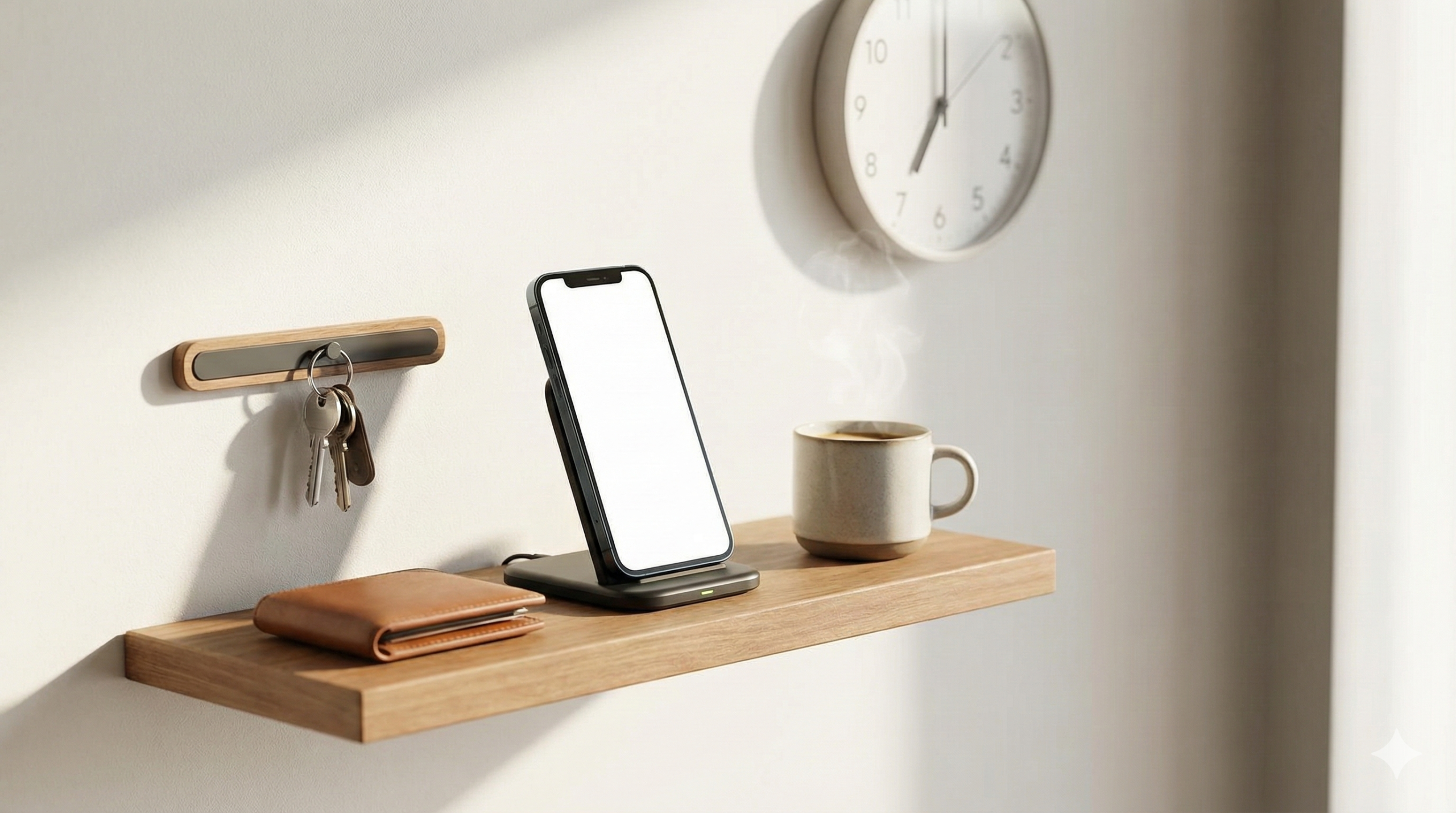
1. The “Landing Strip” Method (Stop the Mess at the Door)
Most clutter isn’t created inside the house; it’s imported. It enters on backs, feet, and in tiny fists holding rocks found on the driveway. If you don’t have a system to catch it immediately, that clutter migrates to the kitchen island, the sofa, and the stairs.
The Strategy: Create a designated “Landing Strip” immediately inside your entry point. This isn’t just a coat rack. It is a containment zone.
A Common Mistake: Parents often set this up for adults—high hooks, heavy closet doors, and hangers that require dexterity. If a four-year-old has to open a closet and fiddle with a hanger, that jacket is ending up on the floor. Every single time.
The Fix:
Go Low: Install hooks at their eye level.
Ditch Hangers: Kids hate hangers. Hooks are the only way.
Open Bins: Use an open basket for shoes. Lining them up is a pipe dream; tossing them in a bucket is doable.
Mini Case Study: The Reynolds family struggled with a “shoe mountain” by the front door that tripped everyone up. They had a beautiful shoe rack, but the kids never used it. Why? It required using hands to place shoes on shelves. They swapped the rack for two large, sturdy wicker baskets—one for big shoes, one for little shoes. The mess vanished because the “kick off and aim” method was fun and required zero effort.
2. Aggressive Toy Rotation (The Hidden Archive)
If your child has 50 toys available at once, they will play with none of them deeply, but they will dump all of them out. This is known as “decision fatigue,” and it affects kids just as much as adults.
The Action Plan: You need to act like a museum curator. Keep 70% of the toys in opaque bins in a closet, garage, or high shelf (The Archive). Keep only 30% out on the shelves (The Gallery).
Surprising Insight: Don’t just rotate randomly. Rotate by category. If you swap a building set for another building set, the novelty wears off fast. If you swap a building set for an imaginative play set (like a doctor’s kit), it feels like a whole new Christmas morning.
The Checklist:
Gather every toy in the living area.
Throw away broken items and recycle trash (missing puzzle pieces, crushed cardboard).
Group the rest into three large piles.
Box up two piles and hide them.
Swap them every 2-3 weeks, or whenever deep play stops happening.
3. The “Visual Noise” Reduction
Sometimes a room feels messy even when it’s clean. This was a huge realization for me. I had cleaned the playroom, everything was off the floor, but I still felt stressed looking at it.
The culprit? Visual noise.
Clear bins are practical because you can see what’s inside, but they contribute to a cluttered look because your eye sees hundreds of tiny shapes and colors.
How to Fix It: Switch to solid-colored, opaque bins for the bulk of the toys. Use labels or pictures on the outside so kids know what goes where. When the bins are solid white, grey, or woven textures, your brain registers “calm surface” rather than “pile of 300 Hot Wheels.”
Do This Next: Take a photo of your child’s play area. Look at the photo on your phone. Does it look chaotic even if it’s tidy? If yes, swap clear storage for solid storage.
4. The “Sunday Reset” and the Basket Walk
Stop trying to deep clean every Tuesday night. You’re tired. Instead, implement the “Basket Walk.”
The Scenario: It’s 7:00 PM. The house is a disaster. You start picking things up item by item, walking from the living room to the bedroom, then back to the kitchen. You walk 2,000 steps and get frustrated.
The Better Way: Get a large laundry basket. Stand in the center of the messy room. Do not leave the room.
Pick up everything that doesn’t belong in that room and throw it in the basket.
Put away everything that does belong in that room.
Move to the next room with your basket.
Distribute items from the basket as you enter their correct zones.
Why It Works: It stops the zig-zagging. You stay focused on clearing one surface at a time.
Quick Aside: I once tried to get my six-year-old to help with this by calling it the “Cleanup Game.” He saw through my lies immediately. Now we put on a 10-minute timer and an upbeat playlist. We don’t aim for perfect; we aim to beat the buzzer. Competition works better than coercion.
5. Handling the Paper Tsunami
Between school worksheets, relentless kid art, and random mail, paper is the silent killer of a tidy home. It accumulates in stacks that eventually slide off counters.
The Mistake: Thinking you need to keep every drawing to be a “good parent.” You don’t.
The Solution: The Digital Gallery
The Fridge Limit: Designate a specific area (like the fridge front) for art. When it’s full, something has to come down to let a new piece go up.
The App: Use an app like Artkive or simply a Google Photos album. Snap a picture of the drawing.
The Bin: Toss the physical paper in the recycling bin. (Do this after bedtime if your child is sentimental).
Surprising Tip: Keep a “To-Do” basket for school papers that actually require action (permission slips). Everything else (graded worksheets, doodles) gets viewed, praised, and recycled immediately.
6. Zoning Your Home (The invisible boundaries)
Mess spreads like a gas—it expands to fill the available space. If you don’t define where toys are allowed, they are allowed everywhere.
The Practical Step: Use rugs or furniture to create hard boundaries. “Legos stay on the blue rug.”
This isn’t just about rules; it’s about physics. If a Lego tower is built in the middle of a walkway, it gets kicked over, resulting in tears and scattered bricks. If it’s built in a protected “zone” (like a corner behind the sofa), it can stay up for days without causing clutter stress.
A Failure to Avoid: Don’t make the zones too complicated. I once tried to label shelves with words (“Vehicles,” “Soft Toys”) for a toddler who couldn’t read. It failed miserably. Use pictures or simply broad categories like “Hard Toys” and “Soft Toys.”
7. The “One-In, One-Out” Rule (But make it gentle)
You cannot organize your way out of excess inventory. If you have too much stuff, no amount of bins will save you.
The Strategy: Before a birthday or holiday, do a declutter session with your kids.
The Script: “We have a lot of cool new toys coming for your birthday! We need to make space so they have a home. Can you help me find 5 toys that you’re done playing with to give to other kids?”
Why This Matters: It teaches the child that objects require space and care. It shifts the focus from “Mom is throwing away my stuff” to “I am making room for new things.”
Summary Checklist: Start Here
If you are overwhelmed, don’t try to do all seven strategies today. Start with the Landing Strip.
[ ] Day 1: Clear the entryway. Add low hooks and a shoe bucket.
[ ] Day 3: Buy opaque bins and start the toy rotation (hide 50% of toys).
[ ] Day 7: Implement the “Basket Walk” for 10 minutes every evening.
Keeping a home mess-free with kids isn’t about erasing their presence. It’s about creating a flow where the mess can happen, but it can also easily be undone. It’s about lowering the bar for “tidy” so that everyone—including the four-year-old—can reach it.
Editor — The editorial team at Tips Clear. We research, test, and fact-check each guide and update it when new info appears. This content is educational and drawn from practical home management strategies, but is not personalized advice.
Author

Discover more from Tips Clear - Content For Daily Life
Subscribe to get the latest posts sent to your email.