
Quick answer: To meal prep on a budget, plan four or five meals, shop from a list of cheap staples, and spend about two hours cooking a few basics in bulk: two proteins, two grains, three vegetables and one sauce. Mix and match them into different meals all week. Store portions in the fridge for up to three to four days and freeze the rest, following USDA food safety rules.
Meal prep sounds like something that takes a whole Sunday and a cupboard full of matching containers. It doesn’t. This beginner’s guide gives you a simple formula, a two-hour plan and the storage rules you need to stay safe, without buying anything fancy.
Why meal prep saves money
Most of the savings come from eating out less. The average US household spent $4,142 on food away from home in 2025, compared with $6,491 on groceries, according to the Bureau of Labor Statistics. That’s about $345 a month on restaurants, takeout and delivery, or roughly 39% of all food spending.
Restaurant prices are also rising faster than grocery prices. In the 12 months to September 2026, food away from home prices rose 3.5%, while grocery prices rose 1.8%.
Meal prep also cuts waste. The USDA estimates that the average family of four loses $1,500 a year to uneaten food. When every ingredient has a planned meal, less of it ends up in the trash.
Here’s what that can mean in practice: if an average household cut its eating-out spending by just a quarter, it would keep about $1,036 a year, or around $86 a month.
3 types of meal prep (pick one to start)
| Type | How it works | Best for |
|---|---|---|
| Ingredient prep | Cook basics like rice, beans and roasted vegetables, then combine them into different meals during the week | Beginners and anyone who gets bored eating the same thing |
| Batch cooking | Make one or two big recipes, like chili or soup, and portion them out | Busy weeks and packed lunches |
| Freezer meals | Cook double and freeze portions to eat in the coming weeks or months | Families and anyone who wants backup meals instead of takeout |
This guide focuses on ingredient prep, because it’s the most flexible and the easiest way to start.
The 2-2-3-1 meal prep formula
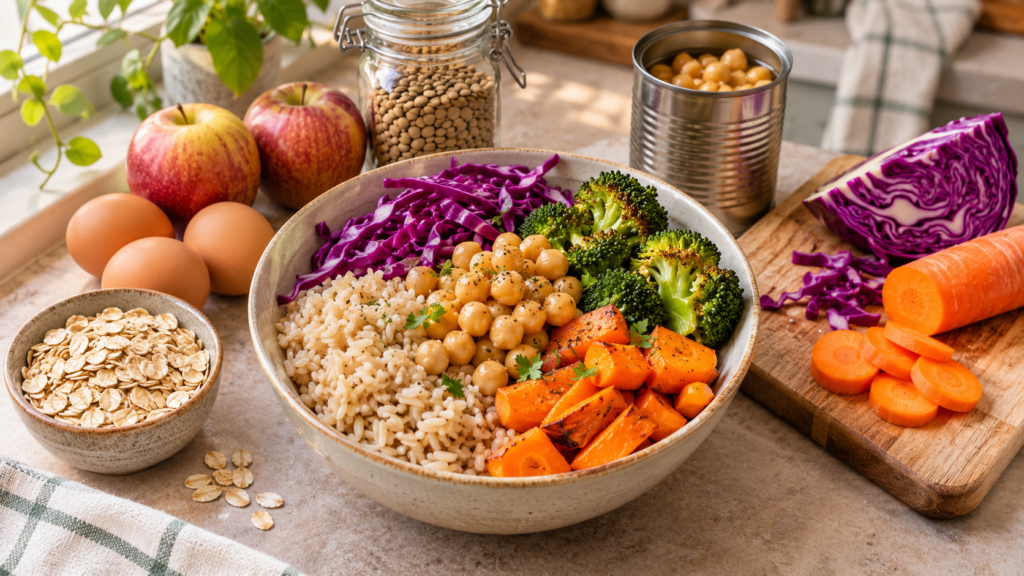
Instead of following five different recipes, cook these building blocks once and combine them all week:
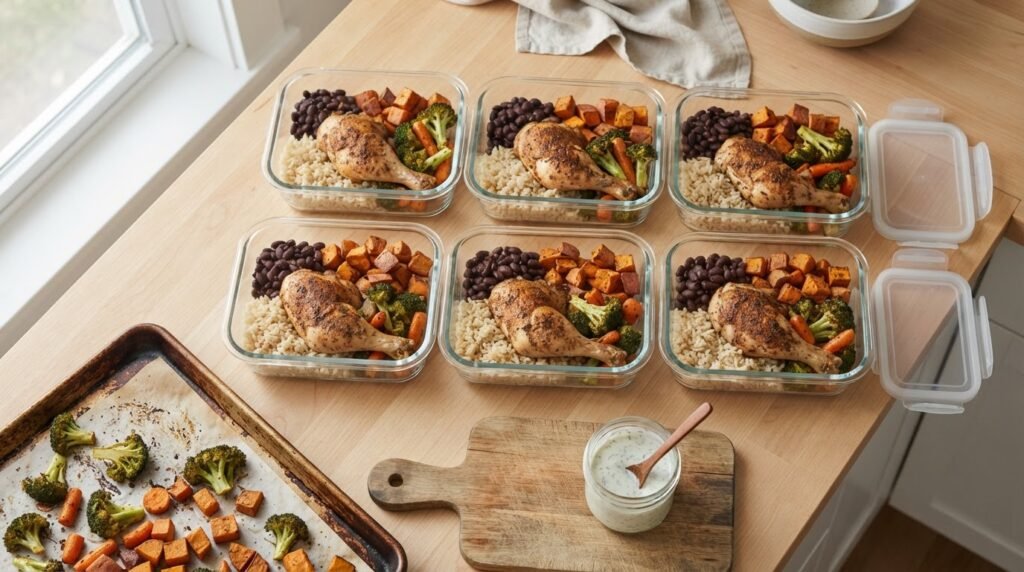
- 2 proteins: for example, a sheet pan of chicken legs and a pot of black beans or lentils. Hard-boiled eggs are a third easy option.
- 2 grains or starches: such as rice and roasted sweet potatoes, or pasta and oats.
- 3 vegetables: one roasted (carrots or broccoli), one raw and crunchy (cabbage slaw or cucumbers) and one frozen to cook as needed.
- 1 sauce: a simple yogurt-garlic sauce, salsa, peanut sauce or a jar of vinaigrette. Sauce is what makes the same ingredients taste like different meals.
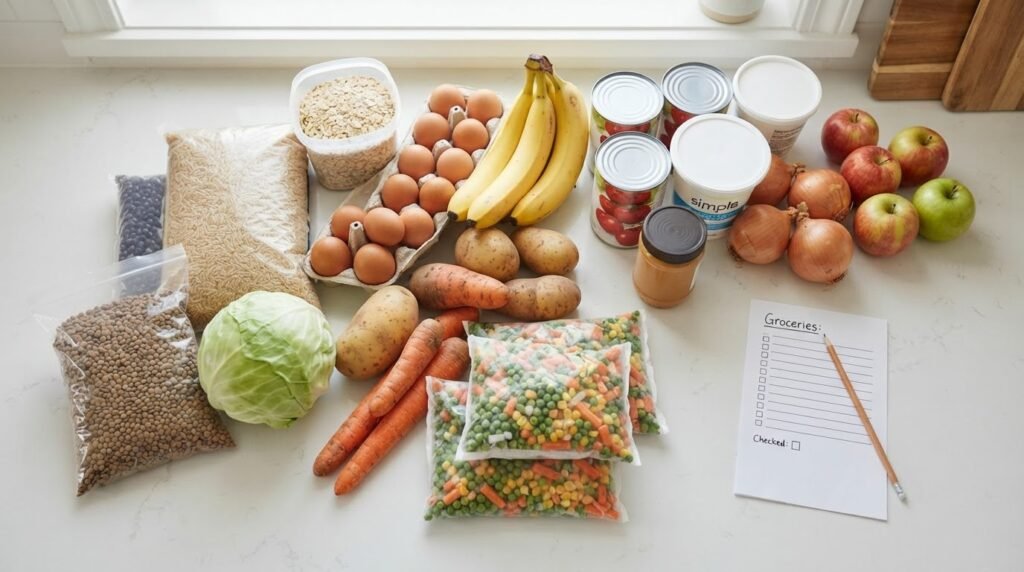
Most of these come straight from our cheap healthy grocery list, so they’re among the lowest-cost foods in the store.
One prep, five different meals
| Meal | Made from |
|---|---|
| Chicken rice bowl with roasted broccoli and yogurt-garlic sauce | Chicken, rice, broccoli, sauce |
| Black bean and sweet potato tacos with slaw | Beans, sweet potatoes, cabbage, tortillas, salsa |
| Egg fried rice with frozen peas and carrots | Eggs, leftover rice, frozen vegetables |
| Chicken and bean soup | Chicken, beans, carrots, broth, canned tomatoes |
| Loaded sweet potatoes | Sweet potatoes, beans, cheese, salsa, slaw on the side |
What you need (no fancy gear)
- One or two sheet pans and one large pot
- A sharp knife and a cutting board
- Containers with lids: glass or BPA-free plastic, plus clean jars from sauces and pickles
- Masking tape and a marker for labels and dates
- A food thermometer, which is inexpensive and the only reliable way to check reheated food
How to meal prep in 6 steps
1. Plan four or five meals
Choose meals that share ingredients, using the formula above. Plan for weekday dinners and lunches first; most people can handle breakfast with oats, eggs or yogurt.
2. Check your kitchen, then make a list
Look in the fridge, freezer and pantry first and build at least one meal around what you already have. Then write a list grouped by store section. For more shopping tips, see our guide on how to eat healthy on a budget.
3. Shop once
Stick to your list, compare unit prices and choose store brands for basics. Buying frozen vegetables means some of your produce won’t spoil before you use it.
4. Cook in the right order
Start the slowest things first so everything finishes around the same time. The two-hour plan below shows how.
5. Cool, portion and label
Divide food into small, shallow containers so it cools quickly, and get it in the fridge within two hours. Label each container with what’s inside and the date.
6. Freeze what you won’t eat in 3 to 4 days
Plan to eat Monday to Wednesday’s portions from the fridge and freeze the rest right away. Move frozen portions to the fridge the night before you want them.
A 2-hour Sunday meal prep plan
| Time | Task |
|---|---|
| 0:00 | Heat the oven. Start dried beans or lentils on the stove (or open canned beans). |
| 0:10 | Season chicken legs and put them in the oven on a sheet pan. |
| 0:20 | Cube sweet potatoes and chop carrots or broccoli; roast them on a second pan. |
| 0:35 | Start the rice. Boil eggs in a small pot if you’re making them. |
| 0:50 | Shred cabbage for slaw and mix the sauce while things cook. |
| 1:05 | Check the chicken has reached 165°F inside; take out the vegetables when tender. |
| 1:15 | Spread hot food into shallow containers to cool. Wash up as you go. |
| 1:40 | Portion into meals, label with the date, refrigerate and freeze. |
| 2:00 | Done. Your week’s lunches and dinners are ready. |
How long meal prep lasts: food safety rules
These rules come from the USDA’s guidance on leftovers and food safety:
| Rule | What to do |
|---|---|
| Get it cold fast | Refrigerate cooked food within 2 hours (within 1 hour if it’s above 90°F). Use small, shallow containers so it cools quickly. |
| Fridge | Eat within 3 to 4 days. |
| Freezer | Keep at 0°F. Frozen food stays safe, but it tastes best within about 3 to 4 months. |
| Thawing | Thaw in the fridge, in cold water or in the microwave, not on the counter. |
| Reheating | Reheat to 165°F, checked with a food thermometer, and stir so it heats evenly. |
Not everything freezes well. Raw salad greens and hard-cooked egg whites, for example, turn watery or rubbery, so keep them in the fridge and eat them early in the week. Soups, chili, cooked grains, beans and cooked chicken freeze well.
8 ways to make meal prep even cheaper
- Build around beans, lentils and eggs, which cost far less per serving than most meat.
- Buy bone-in chicken legs or thighs instead of boneless breasts.
- Cook dried beans and rice in big batches and freeze extra portions.
- Use frozen vegetables for at least one of your three vegetables.
- Make your own sauces from yogurt, garlic, lemon, peanut butter or salsa instead of buying bottled ones.
- Use the same spices in new ways: cumin and chili powder for tacos, garlic and lemon for bowls.
- Plan a leftovers night at the end of the week to finish everything.
- Give groceries their own line in your budget. The 50/30/20 rule treats groceries as a need and takeout as a want, which makes it easy to see where the savings go.
Common beginner mistakes
- Prepping too much the first time. Start with lunches for three days, then build up.
- Cooking seven identical meals. Boredom leads straight back to takeout. Use the mix-and-match formula instead.
- Leaving food out to cool for hours. Spread it into shallow containers and refrigerate within two hours.
- Forgetting to label and date containers, which makes it hard to know what’s still good.
- Skipping breakfast and snacks, which can lead to expensive coffee-shop stops.
Frequently asked questions
How long does meal prep last in the fridge? Three to four days, according to the USDA. Freeze any portions you won’t eat by then.
What are the cheapest foods to meal prep? Rice, oats, dried beans, lentils, eggs, potatoes, sweet potatoes, cabbage, carrots, frozen vegetables and bone-in chicken are some of the best-value options.
How do I keep meal prep from getting boring? Cook simple building blocks rather than finished dishes, then change the sauce and spices. The same rice and beans can become a burrito bowl one day and a soup the next.
Is it safe to reheat meal prep more than once? It’s best to reheat only the portion you’ll eat, and always reheat it to 165°F. Keeping portions small makes this easy.
How much money can meal prep save? It depends on how often you eat out now. The average household spent about $345 a month on food away from home in 2025, so replacing even a few takeout meals a week adds up quickly.
The bottom line
Meal prep on a budget isn’t about perfect containers or complicated recipes. Cook two proteins, two grains, three vegetables and one sauce, mix them into different meals, and store them safely. Two hours on the weekend can replace several takeout orders and stop good food from going to waste.
Next steps: Print our cheap healthy grocery list for your first prep, and put the money you save toward your emergency fund.
Sources
- US Bureau of Labor Statistics: Consumer Expenditures, 2025 (October 29, 2026)
- US Bureau of Labor Statistics: Consumer Price Index (September 2026 data)
- US Department of Agriculture: Food Loss and Waste
- USDA Food Safety and Inspection Service: Leftovers and Food Safety
- University of Nebraska–Lincoln Extension: Leftover Food Safety
This article is for general information. If you have a medical condition, food allergy or special diet, talk with a doctor or registered dietitian.
Pingback: Cheap Healthy Grocery List on a Budget (Printable)
Pingback: How to Eat Healthy on a Budget: 15 Tips That Work