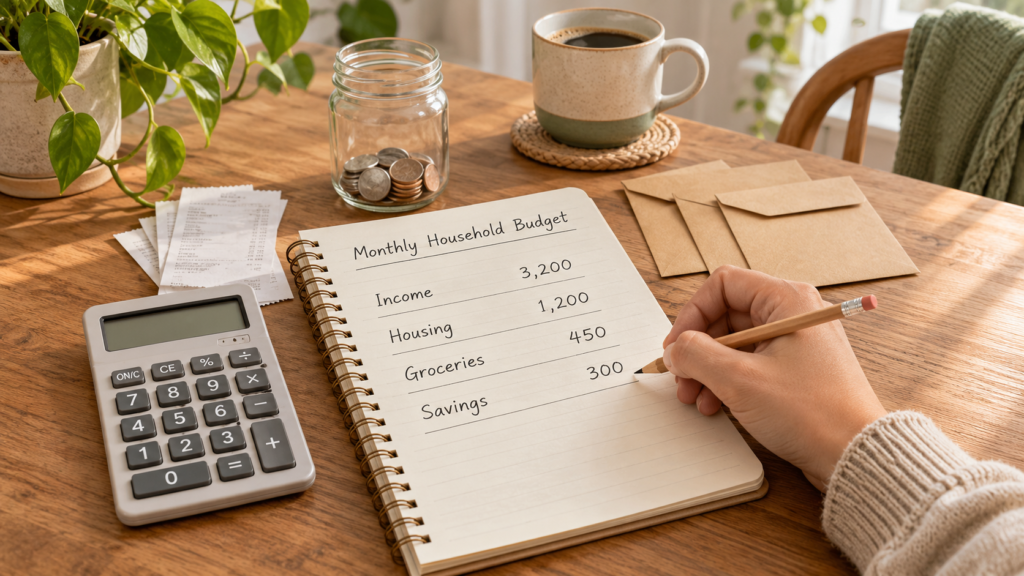
Quick answer: To build an emergency fund fast, start with a small goal of $1,000, open a separate high-yield savings account, and set up an automatic transfer every payday. Speed it up with one-time boosts like your tax refund, selling things you don’t use and a no-spend month. Once you reach $1,000, keep going until you have three to six months of essential expenses saved.
An emergency fund is what keeps a car repair or a surprise medical bill from turning into credit card debt. This guide shows you how much you need, where to keep it, and 10 practical ways to build it faster, even if money is tight right now.
Why an emergency fund matters
Unexpected bills are not rare. In the Federal Reserve’s latest household survey, 59% of adults had at least one major unexpected expense in the past year. The most common were a vehicle repair or replacement (30%), a house or appliance repair (22%) and a major medical bill (21%).
Many households aren’t ready for them. Only 63% of adults said they would cover a $400 emergency with cash or its equivalent, and 30% said they couldn’t cover three months of expenses by any means if they lost their main income. A Bankrate survey found that just 30% of Americans would pay a $1,000 emergency expense from savings.
Without savings, the usual fallback is a credit card or a loan, and the interest makes the emergency cost even more.
What counts as an emergency?
An emergency is something that is unexpected, necessary and urgent.
| Use your emergency fund for | Don’t use it for |
|---|---|
| Losing your job or a big cut in hours | Holiday gifts and birthdays |
| A car repair you need to get to work | A planned vacation |
| Urgent medical or dental bills | Sales and “deals” |
| A broken furnace, water heater or fridge | Annual bills you knew were coming, like car registration |
| An emergency trip for a family crisis | A new phone because the old one is slow |
Expenses you can predict, even if they’re irregular, belong in their own savings bucket, often called a sinking fund, not in your emergency fund.
How much should you have in an emergency fund?
Build it in stages so the goal never feels impossible:
- Starter fund: $1,000. Enough to cover many common surprises like a car repair or an urgent care visit.
- One month of essential expenses. A real buffer between you and debt.
- Three months. The level the Federal Reserve uses as a measure of financial resilience. In 2025, 55% of adults had this much set aside.
- Six months or more. Recommended if your income is irregular or your household depends on one paycheck.
How to calculate your number
Add up only your essential monthly costs: rent or mortgage, utilities, groceries, transportation, insurance, child care and minimum debt payments. Leave out dining out, shopping and streaming, because you’d cut those in a real emergency.
For example, if your essentials come to $2,800 a month:
- 3 months = $8,400
- 6 months = $16,800
Who should save more than three months
- Freelancers, gig workers and anyone paid by commission
- Single-income households, especially with children
- Homeowners, who pay for every repair themselves
- Anyone in an industry with frequent layoffs
- People with ongoing health conditions or an older car
Where to keep your emergency fund
Your emergency fund needs to be safe, easy to reach within a day or two, and separate from your everyday spending money. The best fit for most people is a high-yield savings account at a bank insured by the FDIC or a credit union insured by the NCUA.
Where you keep it makes a real difference. The FDIC’s national average savings rate was 0.38% in mid-2026, while many online high-yield accounts paid around 4% in November 2026. On a $5,000 emergency fund, that’s roughly $19 a year versus about $200 a year in interest. Rates change often, so compare before you open an account.
| Option | Good for an emergency fund? | Why |
|---|---|---|
| High-yield savings account | Yes, best choice | Insured, earns interest, money available in a day or two |
| Money market account | Yes | Insured, similar rates, sometimes with check writing |
| Regular checking account | Not ideal | Too easy to spend by accident, little or no interest |
| Short-term CDs | Only for part of a large fund | Penalties if you withdraw early |
| Stocks or crypto | No | Value can drop right when you need the money |
| Cash at home | Only a small amount | No interest and can be lost or stolen |
10 ways to build an emergency fund fast
1. Automate a transfer on payday
Set up an automatic transfer from checking to your emergency savings the day you get paid. Even $25 a week adds up to $1,300 a year. Saving before you see the money is the single most effective habit.
2. Save your tax refund
A tax refund is often the biggest lump sum of the year. Putting all or part of it in savings can complete your starter fund in one step.
3. Do a no-spend month
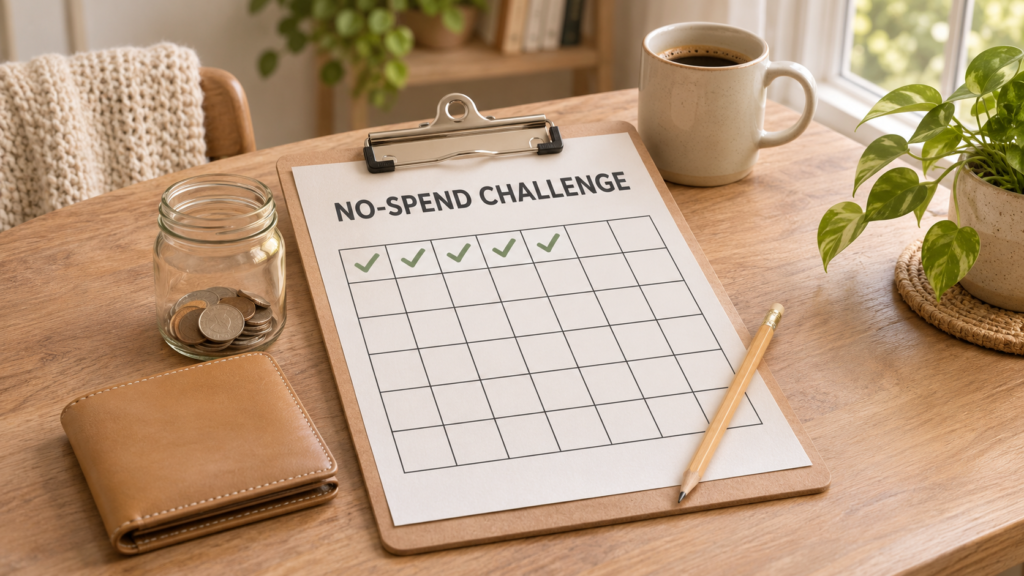
Pause non-essential spending for 30 days and move every dollar you don’t spend into your emergency fund. Our no-spend challenge guide includes rules and a free tracker.
4. Sell what you don’t use
Clothes, electronics, furniture, baby gear and tools can sell quickly on local marketplaces and resale apps. Put every dollar straight into savings.
5. Cancel or pause subscriptions
Go through your bank statement and cancel anything you haven’t used in a month. Then move the exact amount you were paying into savings each month.
6. Cut your grocery bill
Groceries are one of the easiest big expenses to trim. Shop from a list of low-cost staples like the ones in our cheap healthy grocery list and save the difference.
7. Use your 20% savings bucket
If you follow the 50/30/20 rule, point your entire 20% savings bucket at your emergency fund until you reach your starter goal.
8. Save windfalls and raises
Bonuses, cash gifts, rebates and the extra money from a raise can go straight to savings. You weren’t used to having it, so you won’t miss it.
9. Earn a little extra for a short time
A few weeks of extra shifts, pet sitting, tutoring or delivery work can finish a starter fund much faster. Treat it as a short sprint with a clear finish line.
10. Check for an emergency savings account at work
Some employers now offer a pension-linked emergency savings account, created by the SECURE 2.0 Act. Eligible workers can save up to $2,500 (indexed for inflation) through payroll in an account linked to their 401(k) and withdraw it when they need it. Few employers offer one yet, but it’s worth asking HR.
How long will it take? A savings timeline
| You save | $1,000 in | $5,000 in | Saved in one year |
|---|---|---|---|
| $25 a week | 40 weeks (about 9 months) | 200 weeks (about 4 years) | $1,300 |
| $50 a week | 20 weeks (about 5 months) | 100 weeks (about 2 years) | $2,600 |
| $100 a week | 10 weeks (about 2½ months) | 50 weeks (about 1 year) | $5,200 |
| $200 a week | 5 weeks (about 1 month) | 25 weeks (about 6 months) | $10,400 |
One-time boosts like a tax refund or a weekend of selling can cut these times sharply.
Should you build an emergency fund or pay off debt first?
Many people face both. Bankrate found that 29% of Americans have more credit card debt than emergency savings. A common order that balances safety and cost:
- Build a $1,000 starter fund so a surprise doesn’t add new debt.
- Pay off high-interest debt like credit cards while making at least the minimum on everything else.
- Grow your fund to three to six months of essential expenses.
If your employer matches retirement contributions, try to contribute at least enough to get the full match while you work through these steps.
What to do after you use it
Using your emergency fund means it worked. Afterward, pause extra spending and set a short plan to refill it, for example by raising your automatic transfer for a few months until you’re back to your goal.
Frequently asked questions
How much should I have in my emergency fund? Start with $1,000, then build to three to six months of essential expenses. Choose the higher end if your income is irregular, you’re the only earner, or you own a home.
What’s the fastest way to build an emergency fund? Combine an automatic transfer on payday with one-time boosts: your tax refund, selling unused items, a no-spend month and any extra income or windfalls.
Where should I keep my emergency fund? In a separate high-yield savings or money market account that’s FDIC or NCUA insured, so it’s safe, earns interest and is easy to reach in a day or two.
Should I invest my emergency fund? No. Investments can lose value right when you need the money. Keep emergency savings in an insured account and invest money you won’t need for years.
Is $1,000 enough for an emergency fund? It’s a good start and covers many common surprises, but it won’t cover a job loss. Keep building toward a few months of expenses.
The bottom line
You don’t need to save six months of expenses overnight. Start with $1,000 in a separate high-yield savings account, automate a weekly transfer, and give it a push with your tax refund, a no-spend month and anything you can sell. Every dollar you save is one less dollar you’ll ever have to borrow.
Next steps: Find room in your plan with our beginner’s budget guide and the 50/30/20 rule, then free up cash fast with a no-spend challenge.
Sources
- Federal Reserve: Economic Well-Being of US Households in 2025, Savings and Investments (May 2026)
- Federal Reserve: Economic Well-Being of US Households in 2025, Executive Summary (May 2026)
- Bankrate: Just 30% of Americans say they would pay an emergency expense of $1,000 from savings (January 21, 2026)
- Bankrate: 44% of Americans have more emergency savings than credit card debt (February 4, 2026)
- FDIC via FRED: National Rate: Savings
This article is for general education, not personal financial advice.