
Quick answer: An affordable skincare routine needs just three products: a gentle cleanser, a moisturizer and a broad-spectrum sunscreen with SPF 30 or higher. Use all three in the morning and the cleanser and moisturizer at night. Drugstore versions with simple, fragrance-free formulas work as well as expensive ones for most people. Add a fourth product only if you have a specific goal, like treating acne.
Skincare marketing can make it feel like you need a 10-step routine and a shelf of serums. You don’t. Dermatologists keep coming back to the same few basics, and that’s good news for your budget. This guide covers exactly what to buy, what to look for on the label, and where it’s worth spending a little more.
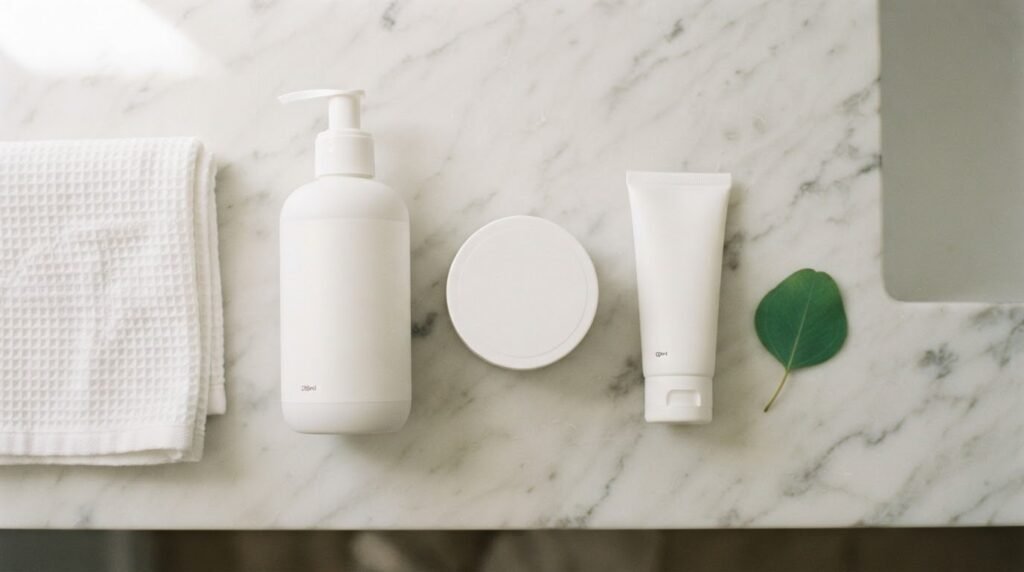
Why a simple routine is enough
The American Academy of Dermatology (AAD) says an effective skincare routine doesn’t need to be complicated or cost a small fortune. Its dermatologists recommend focusing on a gentle cleanser, sunscreen and moisturizer, and warn that using too many products, especially several anti-aging products at once, can irritate your skin.
Price isn’t a reliable guide to quality either. A Cleveland Clinic dermatologist noted in April 2026 that more expensive doesn’t mean better, because the price often reflects packaging, marketing and branding as much as what’s inside. Reading the ingredient list tells you more than the price tag.
For context, the average US household spent $986 on personal care products and services in 2025, according to the Bureau of Labor Statistics. That covers everything from haircuts to toothpaste, but skincare is an easy place to trim without giving anything up.
The 3-step affordable skincare routine
| Step | Morning | Night |
|---|---|---|
| 1. Cleanse | Water or a gentle cleanser | Gentle cleanser to remove sunscreen, makeup and dirt |
| 2. Moisturize | Moisturizer (or skip if your sunscreen is moisturizing enough) | Moisturizer |
| 3. Protect | Broad-spectrum sunscreen, SPF 30 or higher | Not needed |
The AAD’s skin care on a budget advice backs this up: cleanse before bed, use water or a gentle cleanser in the morning, and consider dual-purpose products like a moisturizer with sunscreen to cut costs.
Step 1: A gentle cleanser
Look for words like “gentle,” “hydrating” or “non-foaming” and a short ingredient list. Wash with lukewarm water and your fingertips; scrubbing brushes and hot water can irritate skin. If you have oily or acne-prone skin, a cleanser with salicylic acid or benzoyl peroxide can help, but use it once a day to start.
Step 2: A moisturizer
Moisturizer keeps your skin barrier healthy, even if your skin is oily. Helpful ingredients include ceramides, glycerin, hyaluronic acid and dimethicone. Choose a lightweight lotion or gel for oily skin and a thicker cream for dry skin. Fragrance-free is the safest choice for most people.
Step 3: Sunscreen every morning
Sunscreen is the step that does the most for your skin over time. The AAD recommends a sunscreen that is broad-spectrum, SPF 30 or higher and water resistant, reapplied about every two hours when you’re outdoors or after swimming or sweating. Most people skip that last part: in an AAD survey, only 33% of Americans typically reapply every two hours.
You don’t need to pay extra for a very high SPF. SPF 30 blocks about 97% of the sun’s UVB rays, SPF 50 about 98% and SPF 100 about 99%. Using enough and reapplying matters far more than the number. If you get dark spots, a tinted sunscreen containing iron oxide gives extra protection against visible light.
What to look for by skin type
| Skin type | Cleanser | Moisturizer | Sunscreen |
|---|---|---|---|
| Dry | Creamy, hydrating, non-foaming | Thicker cream with ceramides | Moisturizing lotion or cream |
| Oily | Gel or foaming, gentle | Oil-free lotion or gel | Lightweight, “non-comedogenic” gel or fluid |
| Acne-prone | Salicylic acid or benzoyl peroxide wash | Oil-free, non-comedogenic | Oil-free, non-comedogenic |
| Sensitive | Fragrance-free, very short ingredient list | Fragrance-free, ceramides | Mineral (zinc oxide or titanium dioxide) |
| Combination | Gentle gel | Lightweight lotion; extra cream on dry patches | Lightweight lotion |
Optional add-ons worth the money
Only add a product when you have a specific goal, and add one at a time so you can tell what’s working and what’s irritating.
- A retinoid for acne or signs of aging. Adapalene 0.1% gel became the first retinoid approved for over-the-counter use in 2016, for ages 12 and up. In May 2026 the FDA also approved an over-the-counter gel that combines adapalene with benzoyl peroxide. Start a few nights a week, use a pea-sized amount, and always wear sunscreen. If you’re pregnant or breastfeeding, ask a doctor first.
- A medicated spot treatment with benzoyl peroxide or salicylic acid for occasional breakouts.
- A gentle exfoliant, used once or twice a week at most, if your skin looks dull. Many people don’t need one.
Where to save and where to spend
| Save on | Worth spending a little more on |
|---|---|
| Cleanser: it’s on your face for less than a minute | A sunscreen you actually like wearing every day |
| Basic moisturizer: drugstore formulas with ceramides work well | A proven treatment for a real concern, like a retinoid |
| Toners, mists and “boosters” you don’t need | A dermatologist visit for stubborn acne or skin changes |
| Full product “lines” and gift sets | Nothing just because it’s trending |
How to make skincare products last longer
- Check cost per use, not price. A $15 cleanser that lasts three months costs about 17 cents a day; a $60 cleanser that lasts the same time costs about 67 cents a day. Same job, four times the price.
- Use the right amount. A pea-sized amount of cleanser and a nickel-sized amount of moisturizer is enough for most faces. Sunscreen is the exception: don’t skimp.
- Choose two-in-one products, like a moisturizer with SPF 30 for workdays indoors.
- Compare unit prices and try store brands, which often use very similar ingredients.
- Use it up before buying more. Don’t open a new product until the old one is empty, unless it’s irritating your skin.
- Patch test first. Try a new product on a small area for a few days so you don’t waste money on something your skin rejects.
- Give it time. Most products need several weeks to show results. Switching constantly costs money and can irritate skin.
Skincare spending belongs in the “wants” part of the 50/30/20 budget rule, apart from sunscreen and any treatment your doctor recommends. And just like a capsule wardrobe on a budget, a small set of products you use every day beats a drawer full of things you don’t.
Common skincare mistakes that waste money
- Buying products for problems you don’t have because they’re popular online.
- Layering several strong actives like retinoids, acids and vitamin C at once, which can lead to irritation.
- Skipping sunscreen and then buying products to fix sun damage later.
- Choosing heavily fragranced products, a common cause of irritation.
- Keeping expired sunscreen. Check the date; expired sunscreen may not protect you.
When to see a dermatologist
A simple routine works for everyday care, but see a doctor or board-certified dermatologist if you have acne that leaves scars or doesn’t improve after a few months, a rash that won’t go away, or any mole or spot that changes in size, shape or color, bleeds or doesn’t heal. Depending on your insurance, a prescription treatment can sometimes cost less than trying product after product.
Frequently asked questions
What is the most basic skincare routine? Cleanse, moisturize and apply broad-spectrum sunscreen with SPF 30 or higher in the morning, then cleanse and moisturize at night.
Is drugstore skincare as good as expensive skincare? For most people, yes. Many affordable products use the same proven ingredients, like ceramides, glycerin and hyaluronic acid. Higher prices often reflect packaging and marketing rather than better results.
Do I need a separate moisturizer if my sunscreen is moisturizing? Not always. If your skin feels comfortable with just sunscreen in the morning, you can skip the separate moisturizer and use one at night.
Is SPF 100 better than SPF 30? Only slightly. SPF 30 blocks about 97% of UVB rays and SPF 100 about 99%. Applying enough and reapplying every two hours outdoors matters more.
How much should a skincare routine cost? There’s no set amount. A basic three-product routine from the drugstore is enough for most people. Set a monthly limit in your budget and replace products only when they run out.
The bottom line
An affordable skincare routine comes down to three things: a gentle cleanser, a moisturizer and a daily broad-spectrum sunscreen with SPF 30 or higher. Choose simple, fragrance-free products for your skin type, add a treatment only when you have a clear reason, and let your budget go further by buying less and using it all.
Next steps: Build a closet that works as hard as your routine with our capsule wardrobe guide, or try a no-spend challenge and use up the products you already own.
Sources
- American Academy of Dermatology: Skin care tips that dermatologists use themselves
- American Academy of Dermatology: Skin care on a budget
- American Academy of Dermatology: Sunscreen FAQs
- American Academy of Dermatology: AAD survey shows Americans need sunscreen education
- US Food and Drug Administration: FDA approves Differin Gel 0.1% for over-the-counter use to treat acne (2016)
- Cleveland Clinic: Why expensive beauty products are not always better (April 14, 2026)
- US Bureau of Labor Statistics: Consumer Expenditures, 2025
This article is for general information, not medical advice. If you have a skin condition, allergies or concerns about a mole or rash, see a doctor or board-certified dermatologist.