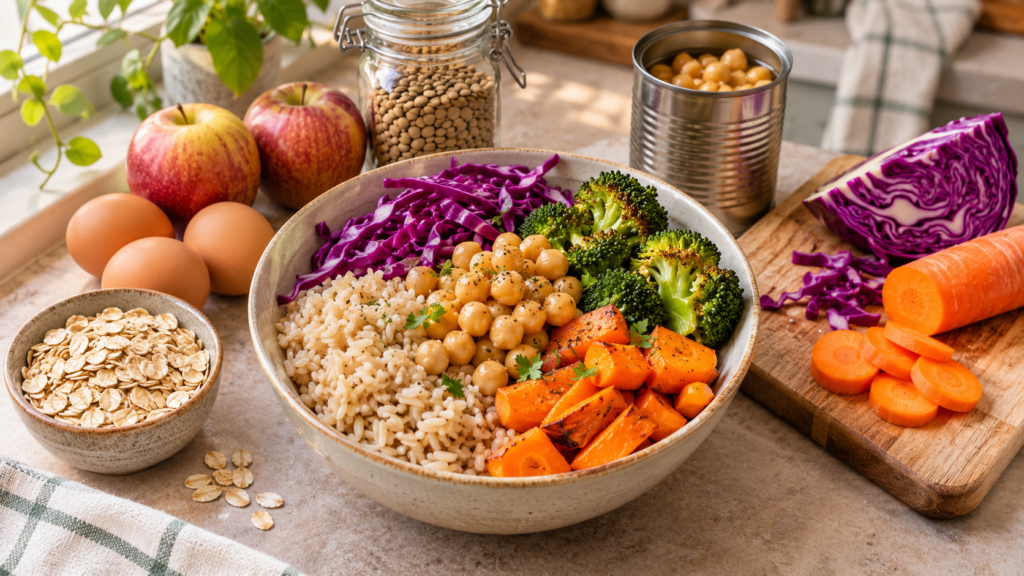
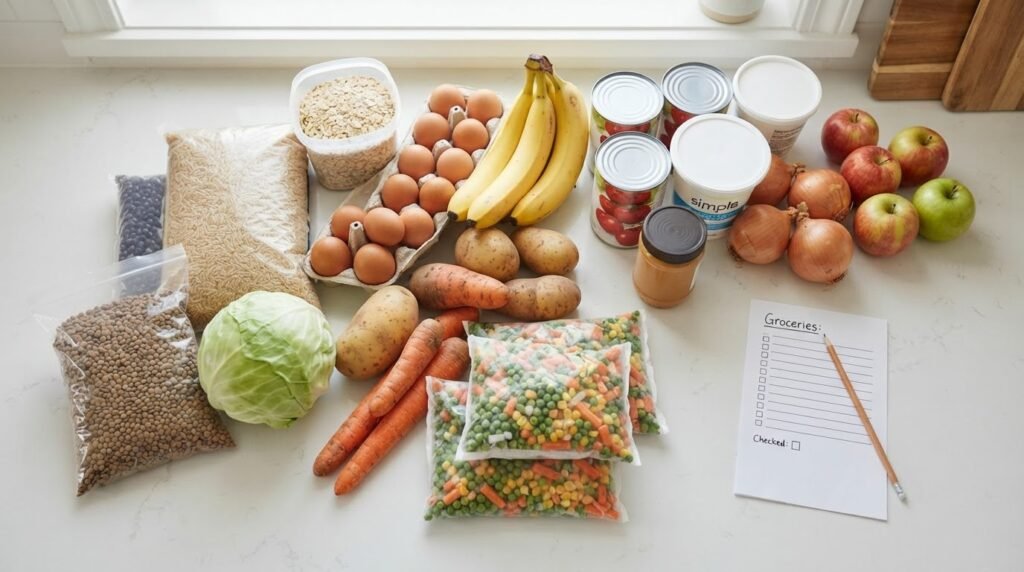
Quick answer: The cheapest healthy foods are dried beans and lentils, rice, oats, eggs, potatoes, bananas, cabbage, carrots, frozen vegetables and chicken legs. Many cost less than 25 cents a serving. Build your weekly list around these staples, add a few fruits and vegetables in season, and you can eat well while spending close to the USDA’s lowest-cost healthy food budget.
Below you’ll find a list of 40 budget staples sorted by food group, what each one actually costs right now, and a checklist you can print or screenshot for your next trip to the store.
What a healthy grocery budget costs in 2026
The USDA’s Thrifty Food Plan shows what a nutritious diet costs when you cook at home and shop carefully. Here’s what it cost in October 2026:
| Household | Monthly cost (Thrifty plan) |
|---|---|
| Woman, 20–50 | $254.20 |
| Man, 20–50 | $319.10 |
| Woman, 51–70 | $236.60 |
| Man, 51–70 | $281.70 |
| Family of four (2 adults, kids 6–8 and 9–11) | $1,024.60 |
That’s about $236 a week for a family of four. If you spend more than this today, the list below is the easiest way to close the gap. The new 2025–2030 Dietary Guidelines, released in January 2026, point the same way: more whole foods and protein, and fewer highly processed foods and added sugar.
The cheapest healthy foods by price per serving
These are US average prices for October 2026 from the Bureau of Labor Statistics. Prices in your area will vary, but the ranking is a useful guide.
| Food | Average price | About per serving |
|---|---|---|
| White rice | $1.10 per lb | $0.11 (¼ cup dry) |
| Dried beans | $1.68 per lb | $0.14 (½ cup cooked) |
| Pasta | $1.38 per lb | $0.17 (2 oz dry) |
| Eggs, large | $2.32 per dozen | $0.19 per egg |
| Bananas | $0.66 per lb | $0.22 per banana |
| Whole milk | $4.10 per gallon | $0.26 per cup |
| White potatoes | $0.99 per lb | $0.50 per medium potato |
| Chicken legs, bone-in | $1.75 per lb | Less than half the price of boneless breast ($4.10 per lb) |
Two takeaways: beans, rice and eggs are some of the cheapest protein and energy you can buy, and switching from boneless chicken breast to bone-in legs saves about $2.35 a pound.
The cheap healthy grocery list: 40 budget staples
Protein (8)
- Dried beans (black, pinto, kidney): the best value on the list. A 1-pound bag makes about 6 cups cooked.
- Dried lentils: cook in 20 minutes with no soaking.
- Canned beans (low sodium or no salt added): pricier than dried but ready to use.
- Eggs: breakfast, lunch or dinner protein for under 20 cents each.
- Canned tuna or salmon: shelf-stable fish for sandwiches and pasta.
- Chicken legs or thighs, bone-in: more flavor and far cheaper than breast.
- Peanut butter: choose one with just peanuts and salt.
- Tofu: cheap plant protein for stir-fries.
Grains (6)
- Rice (brown or white)
- Old-fashioned oats
- Whole wheat pasta
- Whole wheat bread (freeze half the loaf)
- Corn tortillas
- Popcorn kernels: a whole-grain snack for a few cents a bowl
Vegetables (11)
- Potatoes
- Sweet potatoes
- Carrots
- Cabbage: lasts for weeks in the fridge
- Onions
- Garlic
- Frozen broccoli
- Frozen mixed vegetables
- Frozen spinach
- Frozen peas
- Canned tomatoes (no salt added)
Fruit (6)
- Bananas
- Apples
- Oranges or other citrus (cheapest in winter)
- Frozen berries
- Raisins
- Canned fruit packed in juice, not syrup
Dairy (3)
- Milk
- Plain yogurt (buy the large tub and add your own fruit)
- Block cheese (cheaper than shredded; grate it yourself)
Pantry and flavor (6)
- Cooking oil (olive or canola)
- Flour
- Dried herbs and spices (cumin, chili powder, oregano, garlic powder)
- Low-sodium broth
- Vinegar
- Salsa
Printable cheap healthy grocery list
Print this page or take a screenshot of the checklist below. Tick only what you need after checking your fridge and pantry.
| Protein | Grains | Vegetables | Fruit, dairy and pantry |
|---|---|---|---|
| ☐ Dried beans ☐ Lentils ☐ Canned beans ☐ Eggs ☐ Canned tuna or salmon ☐ Chicken legs or thighs ☐ Peanut butter ☐ Tofu |
☐ Rice ☐ Oats ☐ Whole wheat pasta ☐ Whole wheat bread ☐ Corn tortillas ☐ Popcorn kernels |
☐ Potatoes ☐ Sweet potatoes ☐ Carrots ☐ Cabbage ☐ Onions ☐ Garlic ☐ Frozen broccoli ☐ Frozen mixed vegetables ☐ Frozen spinach ☐ Frozen peas ☐ Canned tomatoes |
☐ Bananas ☐ Apples ☐ Oranges ☐ Frozen berries ☐ Raisins ☐ Canned fruit ☐ Milk ☐ Plain yogurt ☐ Block cheese ☐ Cooking oil ☐ Flour ☐ Spices ☐ Broth ☐ Vinegar ☐ Salsa |
How to turn this list into a week of meals
You don’t need 40 items every week. Pick a few from each group and rotate. Here’s one week of dinners that uses the same staples more than once, so nothing goes to waste:
| Day | Dinner | Staples used |
|---|---|---|
| Monday | Black bean and rice bowls with salsa and cabbage slaw | Beans, rice, cabbage, salsa |
| Tuesday | Roasted chicken legs with potatoes and carrots | Chicken, potatoes, carrots, onions |
| Wednesday | Lentil and vegetable soup with toast | Lentils, canned tomatoes, carrots, broth, bread |
| Thursday | Egg fried rice with frozen peas and broccoli | Eggs, leftover rice, frozen vegetables |
| Friday | Bean and cheese tacos | Leftover beans, tortillas, cheese, cabbage, salsa |
For breakfast, rotate oatmeal with banana and peanut butter or eggs on toast. For lunch, use dinner leftovers. Snacks can be yogurt with frozen berries, apples, or popcorn.
8 ways to make your grocery list go further
- Shop your kitchen first. Cross off anything you already have before you leave home.
- Plan meals before you shop. A list built from a plan stops impulse buys and wasted food.
- Compare unit prices. Check the price per ounce or pound on the shelf tag, not the package price.
- Choose store brands. For basics like rice, oats, beans and frozen vegetables, they’re usually cheaper and very similar.
- Buy frozen and canned. They last for months, so less food ends up in the trash.
- Buy produce in season. Apples, squash and citrus cost less in fall and winter; berries in summer.
- Cook dried beans in big batches and freeze them in 1½-cup portions, about the size of a can.
- Give groceries a set amount in your budget. The 50/30/20 rule counts basic groceries as a need and treats and takeout as wants.
For more ideas, see our guide on how to eat healthy on a budget.
Frequently asked questions
What is the cheapest healthy food to buy? Dried beans, lentils, rice, oats and eggs are among the cheapest healthy foods in US stores, many under 20 cents a serving. Bananas, potatoes, cabbage and carrots are the best-value fresh produce.
How much should one person spend on groceries a week? In October 2026, the USDA’s Thrifty Food Plan put a healthy, home-cooked diet at about $55 to $74 a week for one adult, depending on age and sex. Where you live and what you buy will change that.
Are frozen vegetables healthy? Yes. They’re frozen soon after harvest, keep for months and cut down on waste. Choose plain ones without added sauce or salt.
Is it cheaper to buy dried or canned beans? Dried beans cost less per serving, but canned beans save time. Many people keep both: dried for batch cooking and a few cans for busy nights.
How can I eat healthy on a very tight budget? Build meals around beans, rice, eggs, oats, potatoes and frozen vegetables, cook at home, and use leftovers on purpose. A no-spend week that uses up what’s already in your pantry can also free up cash.
The bottom line
A healthy grocery list doesn’t have to be expensive. Beans, rice, oats, eggs, potatoes, cabbage, carrots, bananas and frozen vegetables cost pennies per serving and work in dozens of meals. Print the checklist, plan five dinners and shop with a set budget.
Next steps: Set your grocery amount with our beginner’s budget guide, then try the tips in how to eat healthy on a budget.
Sources
- US Bureau of Labor Statistics: Average retail food prices, US city average (October 2026)
- USDA Food and Nutrition Service: USDA Food Plans: Monthly Cost of Food Reports (October 2026)
- PBS NewsHour: Here’s what’s in the new dietary guidelines (January 7, 2026)
This article is for general information. If you have a medical condition, food allergy or special diet, talk with a doctor or registered dietitian.