
Quick answer: To clean oven racks, take them out of the cooled oven, soak them in very hot water with a few squirts of dish soap for several hours or overnight, then scrub with a stiff brush or a soap-filled steel wool pad. For baked-on grease, coat the racks in a baking soda paste first and let it sit before scrubbing. Rinse, dry completely and wipe the side rails with a little vegetable oil so the racks slide easily.
Don’t leave shiny racks in the oven during a self-clean cycle unless your manual says they’re self-clean racks. The intense heat can discolor them and make them hard to slide. Below are five methods, which one to use for your racks, and the safety rules for oven cleaner.
First, check what kind of racks you have
Most ovens come with one of two kinds of racks, and the difference matters:
- Shiny, silver-colored (chrome or nickel-plated) racks: the most common kind. Clean these by hand. GE says shiny or silver racks will discolor in the self-clean cycle and may warp, which makes them hard to pull in and out.
- Dark, enameled “self-clean” or “never-scrub” racks: some ovens have these. GE says racks labeled this way can stay in the oven during self-clean.
If you’re not sure, check your owner’s manual (most are free online if you search your model number). Whirlpool, Bosch and Samsung all tell owners to take the racks out before a self-clean cycle.
What you’ll need
- Dish soap (a grease-cutting one works best)
- Baking soda
- A stiff scrub brush or old toothbrush, and a soap-filled steel wool pad
- Rubber gloves
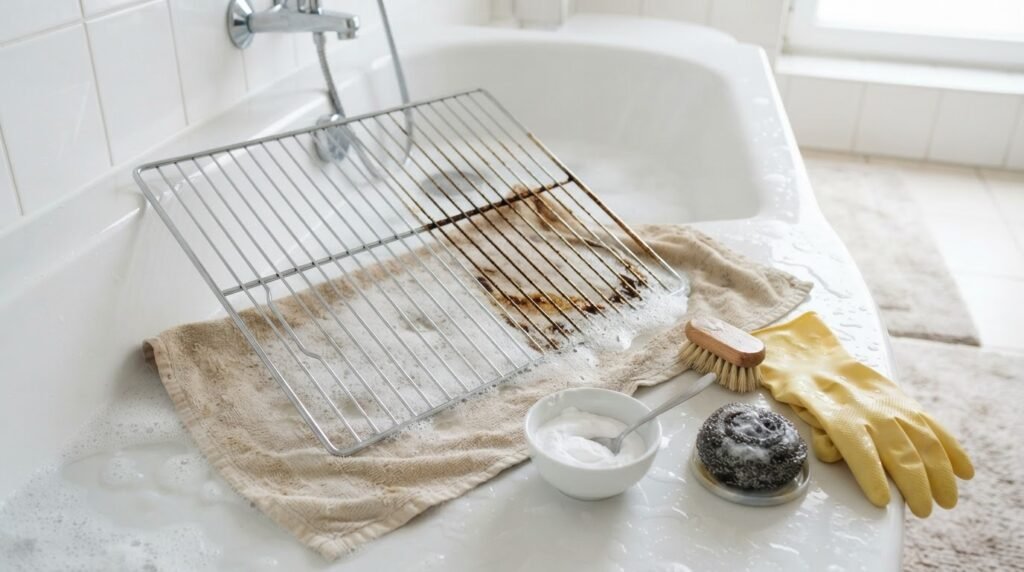
- An old towel and a bathtub, large sink or utility tub
- Optional: a large heavy-duty trash bag and a degreaser or oven cleaner, for the toughest grime
5 ways to clean oven racks compared
| Method | Best for | Hands-on time | Total time |
|---|---|---|---|
| Hot water and dish soap soak | Light to medium grease, regular cleaning | 15–20 min | 4 hours to overnight |
| Baking soda paste | Baked-on brown spots | 20–30 min | 1–12 hours |
| Degreaser or oven cleaner in a bag | Heavy, years-old buildup | 15 min | Overnight |
| Self-clean cycle | Only racks your manual calls self-clean safe | 5 min | A few hours plus cool-down |
| Dishwasher | Light grime, only if your manual allows it | 5 min | One cycle |
Method 1: Soak in hot, soapy water (easiest)
This is the method most manufacturers point to. Bosch recommends hot sudsy water and a soap-filled steel wool pad for stubborn dirt.
1. Remove the racks from a cool oven
Make sure the oven is off and completely cool. Lift the back of each rack slightly and pull it toward you.
2. Protect your tub and fill it
Lay an old towel in the bottom of the tub so the racks don’t scratch the finish. Put the racks on top, fill with the hottest tap water you have until the racks are covered, and add a few good squirts of dish soap.
3. Soak for 4 hours or overnight
The longer the soak, the less scrubbing you’ll do. Overnight is best for racks that haven’t been cleaned in a while.
4. Scrub, rinse and dry
Drain the water and scrub each bar with a stiff brush, using a soap-filled steel wool pad on stuck spots. Rinse well with clean water, dry completely with a towel, and rinse the tub.
One exception: Wolf tells owners of its ovens not to submerge its racks in water. If you have a high-end or full-extension (ball-bearing) rack, check your manual before soaking.
Method 2: Baking soda paste for baked-on grease
Baking soda is a mild alkali, which helps break down grease, and its gritty texture makes a gentle scrub.
- Lay the racks on an old towel or a sheet of newspaper.
- Mix about ½ cup of baking soda with a few spoonfuls of water to make a thick, spreadable paste.
- Spread the paste over the dirty areas with gloved hands or a brush, and let it sit for at least an hour, or overnight for heavy buildup.
- Scrub with a brush or steel wool pad, then rinse well and dry.
Do you need vinegar? Not really. Many online hacks spray vinegar on the paste to make it fizz, but researchers writing in The Conversation explain that the fizz is mostly for show: the acid and base neutralize each other into water, carbon dioxide and sodium acetate. The baking soda and the scrubbing do the cleaning. A splash of vinegar in the rinse water can help remove the last white residue, but that’s all it adds.
Method 3: Degreaser or oven cleaner in a bag (toughest grime)
For racks with years of buildup, Wolf describes a bag method: put the racks in a large heavy-duty trash bag, spray both sides with a degreaser or oven-and-grill cleaner, close the bag tightly, and leave it for 18 to 20 hours. Then, wearing gloves, take the racks out, rinse with hot water and scrub any stubborn spots.
Do this outdoors or in a well-ventilated area, and follow the product label exactly. Many oven cleaners are strongly alkaline (often sodium hydroxide, or lye) and can burn skin and eyes. Some cleaners can also discolor racks, so test a small spot first.
Method 4: The self-clean cycle (only for self-clean racks)
If your manual says your racks are self-clean safe, you can leave them in during the cycle. The cycle uses temperatures up to 885°F, according to GE, to turn food residue to ash.
- Remove everything else from the oven, including foil, pans and cooking probes.
- Open windows or run the vent fan. A little smoke is normal.
- Move pet birds to another closed, well-ventilated room. Whirlpool warns that fumes from a high-temperature self-clean cycle can be fatal to birds.
- When the oven is cool, wipe the ash off the racks with a damp cloth.
Method 5: The dishwasher (only if your manual allows it)
Some manufacturers allow it. Wolf, for example, says its standard (not full-extension) racks are dishwasher safe, though a dishwasher may not remove heavy stains. Many racks don’t fit in a standard dishwasher anyway. If yours fits and your manual allows it, use a normal cycle and scrub any spots that remain by hand.
Oven cleaner safety: what to know
Poison Control advises wearing gloves, eye protection and other gear the manufacturer lists, using oven cleaners in a well-ventilated room, and keeping them in their original container, out of reach of children and pets.
- On skin: rinse under running water for at least 20 minutes, removing any clothing with product on it, then contact Poison Control.
- In the eyes: rinse under running water for 15 to 20 minutes, then call Poison Control.
- Poison Control: call 1-800-222-1222 or use the webPOISONCONTROL online tool. Call 911 if someone has trouble breathing or collapses.
Never mix cleaning products. Some viral hacks use household ammonia in a bag. Wolf says not to use ammonia on its racks, and mixing ammonia with bleach is dangerous: the Washington State Department of Health warns that the mix gives off toxic chloramine gases. Use one product at a time and rinse well before trying another.
After cleaning: make your racks slide easily
Clean racks, especially ones that have been through a self-clean cycle, can stick. GE, Whirlpool and Bosch all suggest the same fix: put a small amount of vegetable oil on a paper towel and wipe it along the side edges of the racks. GE advises against spray lubricants.
How to keep oven racks clean longer
- Put a rimmed baking sheet on the rack below anything that might bubble over, like casseroles and pies. GE advises against lining the oven floor or racks with foil.
- Wipe spills once the oven cools, before they bake on again next time.
- Clean the racks every few months, or whenever you see brown buildup. Adding it to the monthly list in our weekly cleaning schedule keeps it from becoming a big job.
Frequently asked questions
What is the easiest way to clean oven racks? Soak them overnight in a bathtub of very hot water with dish soap, on top of an old towel, then scrub with a brush and rinse. Most grease wipes away after a long soak.
Can I leave the racks in during a self-clean cycle? Only if your manual says they’re self-clean racks, which are usually dark and enameled. Shiny chrome racks can discolor, warp and become hard to slide.
Do dryer sheets clean oven racks? It’s a popular hack: soaking racks with dryer sheets in warm water. We couldn’t find any manufacturer or independent testing that supports it, so we suggest dish soap and baking soda instead, which manufacturers do recommend.
Can I use oven cleaner on oven racks? Often yes, but read the product label and your oven manual first. Some cleaners can discolor chrome. Wear gloves and eye protection, and work somewhere well ventilated.
How do I fix racks that are hard to slide? Wipe a little vegetable oil along the side edges with a paper towel. Avoid spray lubricants and cooking sprays.
The bottom line
For most oven racks, a long soak in hot, soapy water and a good scrub is all you need. Use a baking soda paste for baked-on spots, and save the degreaser-in-a-bag method for the worst buildup. Keep shiny racks out of the self-clean cycle, never mix cleaning products, and finish with a wipe of vegetable oil on the rails.
Next steps: Build oven care into a simple routine with our weekly cleaning schedule, clear the clutter under your sink with these small space storage ideas, and find more savings at home with our tips to lower your electric bill.
Sources
- GE Appliances: Tips for Self Clean, What to Remove Before Self-Cleaning and Removing Oven Racks
- Whirlpool: High Temperature Self-Clean Cycle Information and Cleaning the Oven Racks
- Bosch: How to clean the oven racks
- Sub-Zero and Wolf: Wolf Oven Racks Cleaning Instructions
- Poison Control (National Capital Poison Center): Using oven cleaners safely
- MedlinePlus (US National Library of Medicine): Oven cleaner poisoning
- Washington State Department of Health: Dangers of Mixing Bleach with Cleaners
- The Conversation, via Phys.org: Vinegar and baking soda: A cleaning hack or just a bunch of fizz? (March 2024)
This article is for general information. Always follow your oven manual and the label on any cleaning product. If someone swallows or is splashed with oven cleaner, contact Poison Control right away.