
Quick answer: The fastest ways to lower your electric bill are free: turn your thermostat back 7°F to 10°F for eight hours a day, set your water heater to 120°F, wash clothes in cold water, and switch off devices you’re not using. Next, swap old bulbs for LEDs and seal drafts around windows and doors. If you still can’t keep up, federal programs like LIHEAP can help pay heating bills.
Electricity keeps getting more expensive, and winter is when many households feel it most. This guide shows where your money goes, 20 ways to cut your bill (starting with the free ones), and a calculator to see what any device costs you to run.
Why electric bills are rising
The average US household used 863 kWh of electricity a month in 2024 and paid an average bill of $142.26, at 16.48 cents per kilowatt-hour, according to the US Energy Information Administration (EIA).
Prices have kept climbing since then. The EIA puts the average residential price at 17.3 cents in 2025, and projects 18.2 cents for 2026 and 18.7 cents for 2027. At the 2026 price, the same 863 kWh would cost about $157 a month, or roughly $1,885 a year.
Winter adds more pressure for homes heated with electricity. The EIA expects those households to spend an average of $1,196 on electricity from November 2026 through March 2027, up 4% from last winter.
Where your electricity goes
Heating and cooling are the biggest energy users in most homes. Water heating comes next: the Department of Energy says it accounts for about 18% of your home’s energy use and is typically the second-largest energy expense. Lighting, laundry, the kitchen and electronics make up most of the rest.
That’s why the biggest savings come from heating, cooling and hot water, not from unplugging a phone charger.
What does it cost to run? Calculator
How much does it cost to run? Find the watts on the device label or in the manual, then enter your own electricity rate from your bill.
| Result | Amount |
|---|---|
| Energy used per day | – |
| Cost per day | – |
| Cost per month (30 days) | – |
| Cost per year | – |
Estimates only. Devices with thermostats or motors, like heaters and fridges, cycle on and off, so they often use less than their full rated wattage.
The default numbers show a 1,500-watt space heater running eight hours a day. At 18.2 cents per kWh, that’s 12 kWh and about $2.18 a day, or $65.52 a month. Your own rate is printed on your bill, often as a price per kWh.
Free ways to lower your electric bill today
1. Turn the thermostat back when you sleep or leave
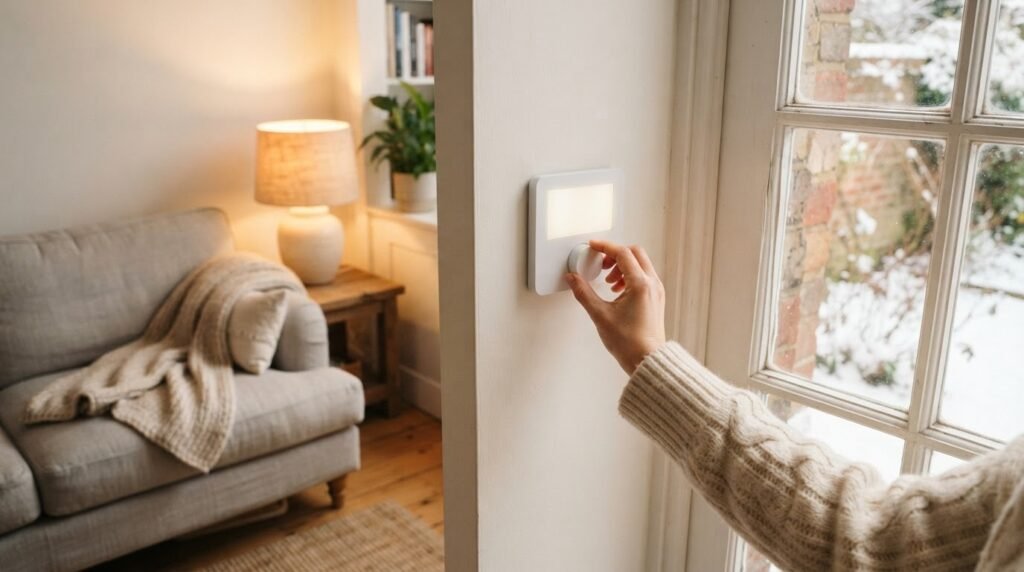
The Department of Energy says you can save as much as 10% a year on heating and cooling by turning your thermostat back 7°F to 10°F for eight hours a day from its normal setting. In winter, that means lower at night and while you’re at work. In summer, it means higher.
2. Set your water heater to 120°F
Many water heaters come set to 140°F. ENERGY STAR recommends lowering it to 120°F, which cuts standby heat loss and lowers the risk of scalding.
3. Wash clothes in cold water
According to ENERGY STAR, heating water uses about 90% of the energy it takes to run a clothes washer. Cold water cleans most everyday loads well, especially with a cold-water detergent.
4. Run full loads only
Washers and dishwashers use about the same energy whether they’re half full or packed, so wait for a full load.
5. Don’t overdry your clothes
Running the dryer an extra 15 minutes per load can cost up to $34 a year, ENERGY STAR estimates. Use the moisture sensor setting, clean the lint filter every time, and air-dry what you can.
6. Use the sun in winter, block it in summer
Open curtains on south-facing windows during sunny winter days and close them at night to hold in heat. In summer, close blinds during the hottest part of the day.
7. Switch off standby power
TVs, game consoles, computers and chargers draw power even when they look off. Plug them into a power strip and switch it off at night or when you leave.
8. Use ceiling fans the right way
A fan cools people, not rooms, so turn it off when you leave. Many fans have a reverse switch: run them on low in the opposite direction in winter to push warm air down from the ceiling.
9. Turn off lights and use task lighting
Light the spot you’re using, like a desk or reading lamp, instead of the whole room.
10. Call your utility
Ask about budget billing (an even monthly payment that smooths out winter spikes), time-of-use plans, free or low-cost home energy audits, and rebates on thermostats, insulation or efficient appliances. Many utilities also offer payment plans if you’ve fallen behind.
Low-cost fixes that pay off quickly
11. Switch to LED bulbs
The Department of Energy says LEDs use at least 75% less energy and last up to 25 times longer than incandescent bulbs. Replacing ten 60-watt incandescent bulbs with 9-watt LEDs, each used three hours a day, saves about 558 kWh a year, or about $102 at 18.2 cents per kWh.
12. Seal air leaks
Caulk gaps around window frames and add weatherstripping to doors. Together with attic insulation, the EPA estimates that air sealing saves homeowners an average of 15% on heating and cooling costs, or 11% on total energy costs. On a $1,885 yearly bill, 11% is about $207.
13. Add window insulation film
Clear plastic film kits for windows cost little and cut drafts from old single-pane windows during winter. They’re also renter-friendly.
14. Change your HVAC filter
A clogged filter makes your system work harder. Check it monthly in heavy-use seasons and replace it when it’s dirty.
15. Use a programmable or smart thermostat
It makes tip 1 automatic, so you save without having to remember. Check with your utility first, because many offer rebates.
16. Heat the room, not the house, carefully
A space heater can make sense if you only use one room, but use the calculator above first: at 1,500 watts, it adds up fast. Plug it directly into a wall outlet, keep it away from anything that can burn, and never leave it running unattended.
Bigger upgrades that save over time
17. Insulate your attic
If your attic insulation is thin or uneven, adding more is one of the most effective upgrades for older homes. A home energy audit will tell you whether it’s worth it.
18. Replace old appliances with ENERGY STAR models
When a fridge, washer or water heater needs replacing anyway, pick an ENERGY STAR certified model. A heat pump water heater can use far less electricity than a standard electric tank.
19. Check incentives before big projects
The federal Energy Efficient Home Improvement Credit has ended. The IRS says it isn’t allowed for property placed in service after December 31, 2025. State programs and utility rebates may still help, so check before you buy.
Help if you’re struggling to pay
20. Apply for energy assistance
- LIHEAP: the federal Low Income Home Energy Assistance Program can help with heating bills, preventing shutoffs, reconnecting service and making homes more energy efficient. It’s run by states, and many open their winter applications in October or November. Apply early, because funds can run out.
- Weatherization Assistance Program: this Department of Energy program upgrades the homes of income-eligible households for free. The DOE says these households save $372 or more a year on average.
- Your utility: ask about hardship programs, discounted rates and payment plans before a bill goes past due.
How much could you save? An example
| Change | Estimated savings | Cost to you |
|---|---|---|
| Thermostat setback (7°F to 10°F, 8 hours a day) | Up to 10% of heating and cooling costs | Free |
| Ten LED bulbs replacing 60-watt incandescents (3 hours a day) | About $102 a year | Low |
| Air sealing and attic insulation | About 11% of total energy costs (about $207 on a $1,885 bill) | Low to moderate |
| Water heater from 140°F to 120°F | Lower standby heat loss | Free |
| Cold-water laundry | Cuts most of the washer’s energy use | Free |
Savings depend on your climate, home, appliances and rate, so treat these as examples. The free changes alone are worth doing first.
Tips for renters
You can’t insulate the attic in a rental, but most of the biggest wins still work: thermostat settings, cold-water laundry, LEDs, power strips, window film, door draft stoppers and curtains. Ask your landlord about sealing drafty windows or servicing the heating system, and check whether your utility offers free energy-saving kits. Our guide to apartment decorating on a budget has more renter-friendly ideas.
Plan for high winter bills
Even after cutting usage, winter bills can be lumpy. Two simple fixes help: sign up for your utility’s budget billing, or save a little each month in a sinking fund for utilities, so January’s bill doesn’t land on a credit card. Then give the money you save a job in your monthly budget.
Frequently asked questions
What uses the most electricity in a home? Heating and cooling usually use the most, followed by water heating, which the Department of Energy puts at about 18% of home energy use.
What temperature should I set my thermostat to in winter? Keep it as low as you’re comfortable with while you’re home, then turn it back 7°F to 10°F when you’re asleep or away. The Department of Energy says that can save up to 10% a year on heating and cooling.
Does unplugging devices really save money? A little. Standby power from TVs, consoles and chargers adds up across a whole home, but heating, cooling and hot water changes save far more.
Are space heaters cheaper than central heat? Only if you heat one small room instead of the whole house. A 1,500-watt heater running eight hours a day costs about $65 a month at 18.2 cents per kWh.
Can I get help paying my electric bill? Yes. Apply for LIHEAP through your state, ask your utility about payment plans and hardship programs, and see if you qualify for free weatherization.
The bottom line
Start with the free changes: thermostat setbacks, a 120°F water heater, cold-water laundry and switching things off. Then spend a little on LEDs and draft sealing, which pay for themselves quickly. If bills are still more than you can manage, apply for help before you fall behind.
Next steps: Put your savings to work by building an emergency fund, and see where utilities fit in the 50/30/20 rule. Thinking about buying a home? Include energy costs when you work out how much house you can afford.
Sources
- US Energy Information Administration: 2024 Average Monthly Bill, Residential
- US Energy Information Administration: Short-Term Energy Outlook, electricity (October 6, 2026)
- US Energy Information Administration: Winter Fuels Outlook 2026–27
- US Department of Energy: Thermostats, Water Heating and LED Lighting
- ENERGY STAR: Clothes Washers, Why Seal and Insulate and How to Save Energy at Home
- IRS: Energy credit FAQs
- Administration for Children and Families: LIHEAP
- US Department of Energy: Weatherization Assistance Program
This article is for general education. Follow your appliance manuals and local safety codes, and talk with a licensed professional before electrical or HVAC work.